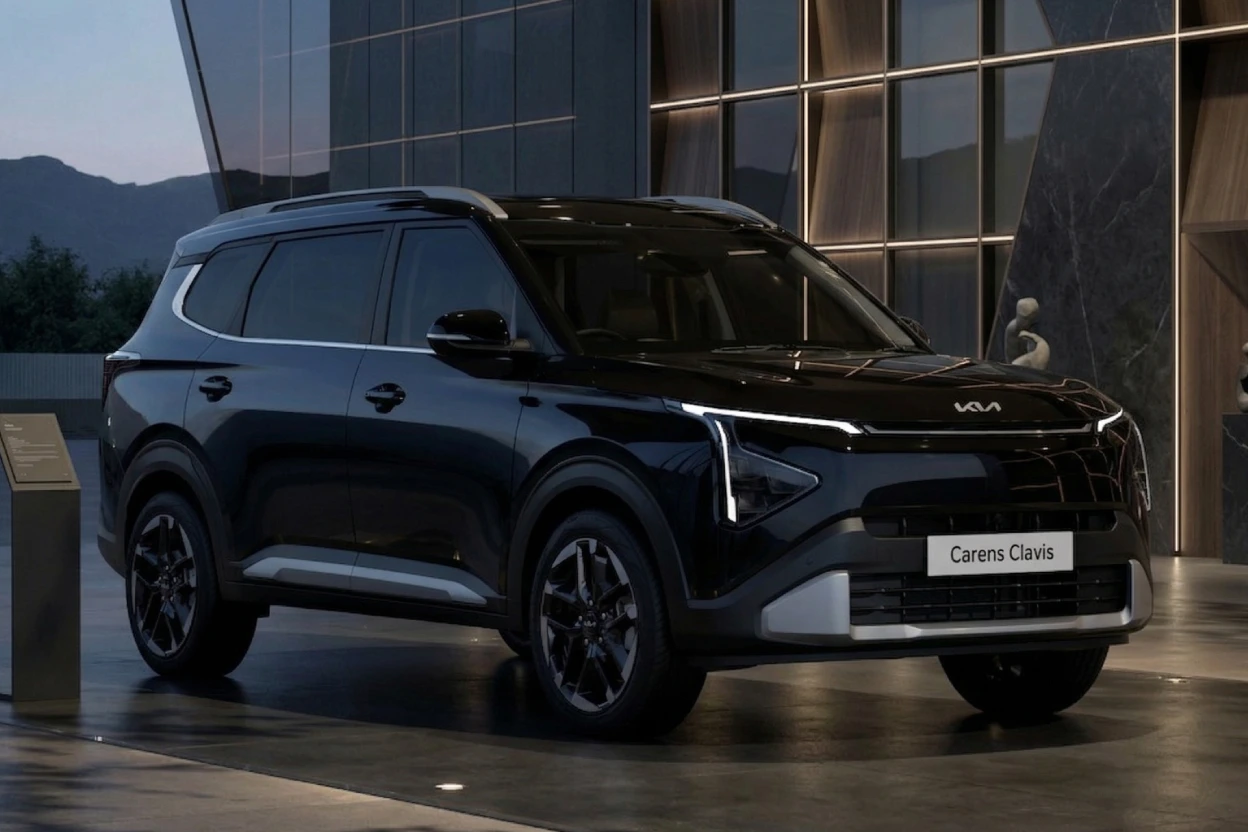
Kia knows exactly what it’s doing with the Carens Clavis. The 2026 update isn’t a ground-up redesign, and nobody was expecting one. What it is, is a calculated repositioning — new trims at the top, features pushed further down the variant ladder, and ADAS made accessible to buyers who previously had to stretch uncomfortably to get it. Whether that’s enough to hold ground in one of India’s most fiercely contested MPV segments is the real question.
Let me break down what’s actually changed, what it means in practice, and where I think Kia has played this well — and where it hasn’t.
What’s new: the GT-Line and X-Line explained
The headline additions are two new trim identities — GT-Line and X-Line — both sitting at the upper end of the Carens Clavis variant hierarchy and both exclusive to the 1.5-litre turbo-petrol engine. That engine restriction is worth noting upfront. If you want the GT-Line aesthetic with the diesel powertrain, you’re out of luck. Kia has made a deliberate choice to pair the sportier visual packages with the more performance-oriented engine option.
The GT-Line arrives in GTX and GTX+ specifications. From a body shop and exterior standpoint, the changes are meaningful rather than token — revised bumpers, gloss black exterior trim elements, new alloy wheel designs, coloured brake calipers, and metal pedals inside. These aren’t just stickers. The coloured calipers in particular are a detail usually reserved for vehicles sitting at a considerably higher price point on the dealership floor.
The X-Line takes a different direction entirely. Where the GT-Line goes sporty, the X-Line goes darker — exclusive paint finish, a more aggressive exterior treatment that Kia is positioning as a distinct visual identity within the lineup. Think of it as the rugged urban variant versus the GT-Line’s track-adjacent character.
Both new trims offer a 6-seat layout with second-row captain seats rather than a bench. From my personal experience, captain seats in this segment genuinely transform the rear passenger experience — easier ingress and egress on both sides, more defined personal space, and a premium feel that the bench layout simply doesn’t replicate.
The more important update: features moving down the trim ladder
New trims get the headlines, but as per my knowledge of how Indian car buyers actually make purchasing decisions, the more consequential change in this update is the feature redistribution across existing variants.
The HTK+ variant — which sits in the middle of the range and represents the sweet spot for a significant chunk of buyers — now includes an electric sunroof as standard. Previously, you had to move up the variant hierarchy to access it. That’s a real change with real purchasing implications.
From HTK+(O) onwards, buyers now get a panoramic sunroof, LED headlamps, and a dashcam included. The dashcam addition in particular is interesting from a safety and practicality standpoint — it’s a feature most buyers add aftermarket anyway, and integrating it from the assembly line means cleaner installation and no DIY wiring.
The ADAS expansion is the update I find most significant from a safety perspective. Bringing ADAS-equipped variants to a lower price point means more Carens Clavis buyers on Indian roads get access to active safety systems — forward collision warning, lane keeping assistance, and blind spot monitoring — without having to clear the ₹18-19 lakh threshold. As per my opinion, this is the kind of quality control decision that matters more than any cosmetic trim addition. Road safety technology should be accessible, not a luxury upsell.
Mechanically: nothing has changed, and that’s fine
The powertrain lineup remains exactly as it was. Three engine options — a 1.5-litre naturally aspirated petrol, a 1.5-litre turbo-petrol, and a 1.5-litre diesel — paired with a range of transmission choices depending on variant: 6-speed manual, iMT, 7-speed dual-clutch automatic, and 6-speed torque converter automatic.
The one mechanical addition is Idle Stop-Go (ISG) technology across the range, which cuts the engine when the vehicle is stationary and restarts it when the driver releases the brake. In urban stop-go traffic — which describes most Indian city driving conditions — this meaningfully reduces fuel consumption. It’s not a dramatic change, but it’s a sensible one, and it brings the Carens Clavis in line with what rivals already offer at this segment.
Old vs new: how the 2026 Carens Clavis compares to the pre-update model
| Feature | Carens Clavis (Pre-2026) | Carens Clavis (2026 Update) |
|---|---|---|
| Top trims available | HTX, HTX+ | HTX, HTX+, GT-Line GTX, GTX+, X-Line |
| Electric sunroof availability | HTX and above | HTK+ and above |
| Panoramic sunroof | Higher trims only | HTK+(O) and above |
| LED headlamps | Higher trims only | HTK+(O) and above |
| Dashcam (factory fitted) | Not available | HTK+(O) and above |
| ADAS entry point | Higher price variants | Lower entry point (new) |
| Idle Stop-Go (ISG) | Not across range | Added across lineup |
| Captain seats (6-seat) | Select variants | GT-Line and X-Line standard |
| Coloured brake calipers | Not available | GT-Line variants |
| Exclusive paint options | Standard palette | X-Line exclusive finish |
| Engine options | 1.5 NA / 1.5T / 1.5D | Unchanged |
| Starting price | ~₹10.50 lakh | ₹11.20 lakh |
| Top variant price | ~₹20.00 lakh | ₹21.56 lakh |
The price movement at the entry level — roughly ₹70,000 up from the pre-update starting point — reflects the feature additions pushed down the variant stack. You’re paying slightly more at the base, but getting more in return.
Segment comparison: where the updated Carens Clavis sits against its rivals
The 3-row MPV and 6-7 seat family vehicle space in India is legitimately competitive. The Maruti Suzuki Ertiga, Toyota Rumion, Mahindra Marazzo, and Hyundai Alcazar all compete for the same buyer. Here’s how the updated Carens Clavis stacks up:
| Feature | Kia Carens Clavis (2026) | Hyundai Alcazar (2024) | Maruti Suzuki Ertiga (2024) | Toyota Rumion (2024) | Mahindra Marazzo (2024) |
|---|---|---|---|---|---|
| Engine options | 1.5 NA / 1.5T / 1.5D | 1.5T Petrol / 1.5D | 1.5L NA Petrol | 1.5L NA Petrol | 1.5D Diesel |
| Seating | 6 or 7 | 6 or 7 | 7 | 7 | 7 or 8 |
| Panoramic sunroof | Yes (HTK+(O)+) | Yes (top trims) | No | No | No |
| ADAS | Yes | Yes | No | No | No |
| DCT / AT option | Yes (7-speed DCT + 6AT) | Yes | Yes (4AT) | Yes (4AT) | No |
| Turbo petrol option | Yes | Yes | No | No | No |
| GT/Sport trim | Yes (GT-Line) | Yes (Knight/Sportz) | No | No | No |
| Starting price | ₹11.20 lakh | ₹14.99 lakh | ₹8.69 lakh | ₹10.30 lakh | ₹13.99 lakh |
| Top variant price | ₹21.56 lakh | ₹21.49 lakh | ₹13.50 lakh | ₹14.00 lakh | ₹16.00 lakh |
| Factory dashcam | Yes | No | No | No | No |
| ISG technology | Yes (2026) | Yes | Yes | Yes | No |
The Carens Clavis holds a real advantage over the Ertiga and Rumion in terms of technology depth — turbo petrol option, ADAS availability, panoramic sunroof, and now factory dashcam. Against the Alcazar, it’s a closer fight. The Hyundai and Kia share significant platform and engine DNA, and the pricing overlap at the top of the range is nearly identical. The GT-Line is Kia’s answer to Alcazar’s Knight Edition — a cosmetic and feature differentiation play aimed at buyers who want something that looks less like everyone else in the apartment car park.
The Mahindra Marazzo is the outlier here — diesel only, no turbo petrol, no DCT — but it has a genuine chassis and ride quality advantage over the others that its loyal buyers will tell you about at length.
Where I think Kia has this right
The feature redistribution is the smartest part of this update. Moving the electric sunroof to HTK+, adding the panoramic roof and LED headlamps from HTK+(O), and bringing ADAS to a lower price point — these decisions make the Carens Clavis more competitive at the volume-selling variants, not just at the top of the lineup.
Most automakers do the opposite. They add features at the top to justify higher prices on paper while the actual volume variants stay largely unchanged. Kia has done the reverse here, and as per my opinion, that’s a more honest response to what buyers in the ₹12-16 lakh range actually need from a family vehicle.
The GT-Line and X-Line additions are good for brand positioning and showroom attention. But they’re not where most Carens Clavis buyers will land.
Where I have concerns
The engine restriction on the new trims bothers me. Limiting the GT-Line and X-Line exclusively to the 1.5-litre turbo-petrol cuts out diesel buyers who want the top-spec visual treatment. The diesel Carens Clavis is a genuinely capable long-distance machine — better fuel efficiency, stronger mid-range torque, better suited to highway driving. Denying those buyers access to the GT-Line trim is a limitation that feels commercially motivated rather than technically necessary.
I would also advise buyers to look carefully at the variant pricing before walking into the dealership. The gap between, say, HTK+(O) and GTX is meaningful, and the features added at GTX need to justify that jump. For most family buyers who need practical space and modern safety tech rather than coloured calipers and gloss black trim, the HTK+(O) or HTX variant at a lower price will almost certainly be the better decision.
I would advise against buying the X-Line purely on aesthetics without driving it first. The exclusive paint and darker exterior treatment are eye-catching on paper. Whether the premium over the standard HTX+ is justified for your specific use case depends entirely on how much time you spend in urban environments versus highways, and how important visual distinctiveness is to you relative to the additional outlay.
Pricing context
The Carens Clavis 2026 range runs from ₹11.20 lakh to ₹21.56 lakh ex-showroom. The entry point is about ₹70,000 higher than before — a reflection of the feature additions at the base. The top-end GT-Line GTX+ and X-Line variants occupy the ₹19-21 lakh bracket, where the competition from the Alcazar and the upper variants of the Marazzo is direct.
At financing rates currently available through most dealership networks, the monthly outlay on a mid-range Carens Clavis HTK+(O) variant over a 5-year loan sits in a range accessible to a dual-income urban household. That’s the buyer Kia is targeting — and the feature set at that price point, post this update, is genuinely competitive.