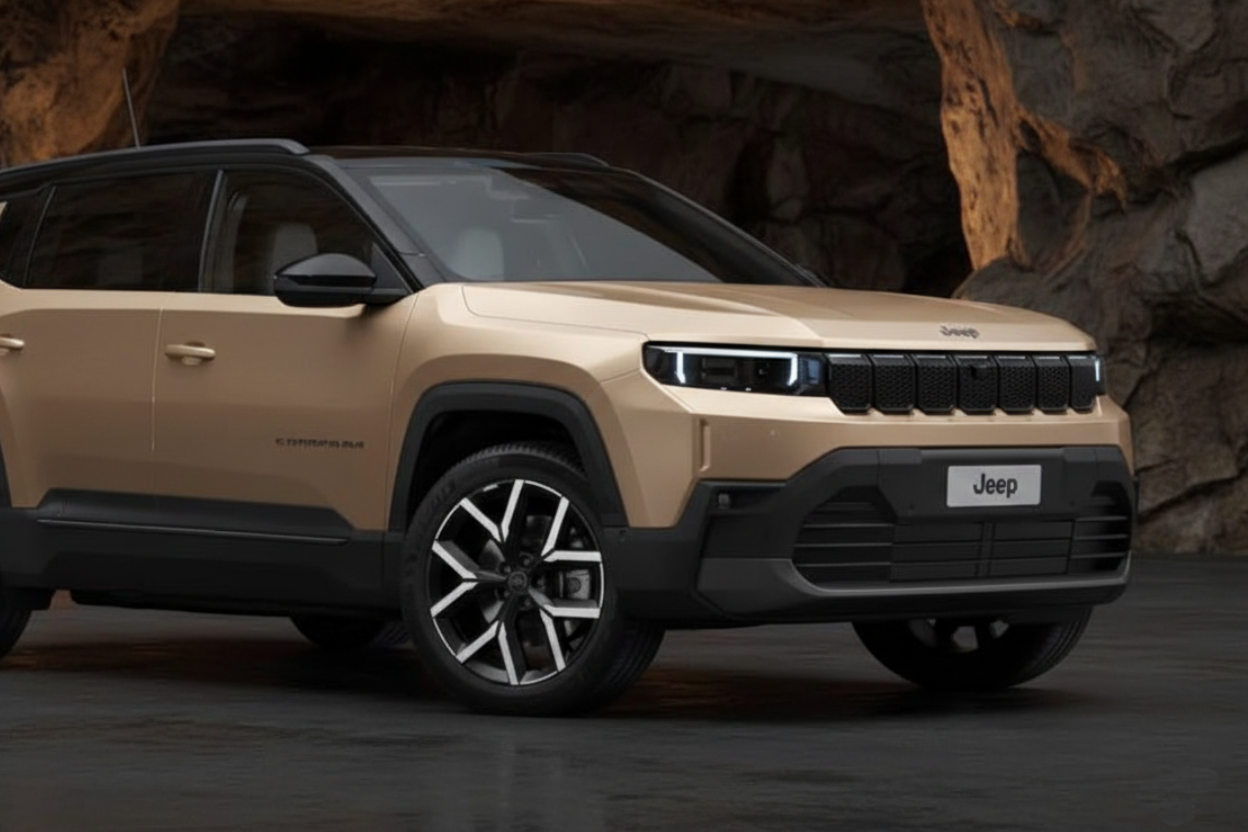
The Indian automotive landscape is a graveyard of ambitious brands that failed to decode the local DNA. However, Jeep India seems determined to rewrite its narrative. As per my knowledge, the automaker has finally broken its silence, confirming a brand-new SUV slated for a 2027 debut. This isn’t just another model rollout; it’s an assertive attempt by Stellantis to fix a leaky bucket. After a five-year drought of fresh metal, save for a few cosmetic “special editions,” this move feels like a calculated tactical maneuver to stay relevant in a market that moves at breakneck speed.
In my personal experience, Jeep’s biggest hurdle hasn’t been the product quality—it’s been the “premium” price tag that often felt disconnected from the ground reality. By aiming for a staggering 90% localization, they are finally addressing the elephant in the room. Moving away from a 65% localization rate means the supply chain is being overhauled. We are talking about sourcing critical components like the chassis members, axle assemblies, and perhaps even complex transmission parts locally rather than importing them as expensive kits.
The Engineering Shift: Then vs. Now
To understand where Jeep is headed, we have to look at the prototype philosophy that defined the brand a decade ago compared to the 2027 vision.
| Feature | The Early “Import Era” (Grand Cherokee/Wrangler CBU) | The 2027 Localization Era (Upcoming SUV) |
| Localization Level | 0% to 15% | Targeting 90% |
| Manufacturing Hub | North America / Europe | Ranjangaon Assembly Line (Export Hub) |
| Powertrain Focus | High-displacement, thirsty engines | Downsized, high-efficiency turbocharged engines |
| Maintenance | Expensive parts, limited repair shop access | Aggressive maintenance packages & extended warranty |
| Technology | Analog-heavy, rugged utility | Connected tech, safety suites (ADAS), and digital cockpits |
As per my opinion, the shift from being a niche marque to a high-volume player requires a massive boost in quality control (SPC). If Jeep wants to export Indian-made SUVs to North America—the very birthplace of the brand—the manufacturing standards at the Ranjangaon body shop will have to be nothing short of flawless.
Competitive Landscape: The Mid-to-Large SUV Rumble
The 2027 SUV is expected to sit in a hyper-competitive bracket. While Jeep hasn’t spilled the beans on the exact segment, the grapevine suggests it will challenge the undisputed leaders of the mid-size and premium SUV space.
I’ve put together a comparison of how the current Jeep lineup stacks up against the rivals that the 2027 newcomer will likely have to outmuscle in the dealership wars.
| Spec/Feature | Jeep Compass/2027 SUV (Expected) | Mahindra XUV700 | Tata Safari | Hyundai Tucson |
| Drivetrain | 4×4 / AWD (Core DNA) | AWD (Select variants) | FWD Only | AWD (Top variant) |
| Suspension | Independent multi-link (Fine-tuned) | FSD (Frequency Selective Damping) | Semi-independent | Premium independent |
| Engine Tech | MultiJet II / Global Small Engine | mStallion / mHawk | Kryotec (Fiat-sourced) | Nu 2.0 / R 2.0 |
| Brand Perception | Rugged, Global Heritage | Tech-forward, Value King | Robust, National Pride | Sophisticated, Urban Luxury |
A Critical Outlook: Can Special Editions Bridge the Gap?
I would advise a healthy dose of skepticism regarding the interim strategy. Between now and 2027, Jeep plans to launch “special editions” of the Compass and Meridian. In the automotive world, this is often a marketing euphemism for “we have nothing new, so here is some black paint and new wheels.”
Is it enough to keep the showroom lights on? I’m concerned. While the R&D teams are busy perfecting the 2027 model, the competition isn’t sitting still. By the time this new SUV hits the gas station, the market might have shifted heavily toward electrification. If the 2027 project doesn’t include a robust hybrid or EV engine option, it might arrive as a relic of a bygone era.
A Critical Outlook: Can Special Editions Bridge the Gap?
I would advise a healthy dose of skepticism regarding the interim strategy. Between now and 2027, Jeep plans to launch “special editions” of the Compass and Meridian. In the automotive world, this is often a marketing euphemism for “we have nothing new, so here is some black paint and new wheels.”
Is it enough to keep the showroom lights on? I’m concerned. While the R&D teams are busy perfecting the 2027 model, the competition isn’t sitting still. By the time this new SUV hits the gas station, the market might have shifted heavily toward electrification. If the 2027 project doesn’t include a robust hybrid or EV engine option, it might arrive as a relic of a bygone era.
The Export Strategy: A Saving Grace?
One thing Jeep is doing right is the focus on exports. By making India a global hub for right-hand-drive (and potentially left-hand-drive) markets, they ensure the assembly line remains profitable even if domestic sales fluctuate. This provides the financial cushion needed to invest in sales/service upgrades.
As per my knowledge, the plan to introduce extended warranty options and loyalty programs is a direct response to customer complaints about high “cost of ownership.” If they can convince a buyer that a Jeep tune-up won’t break the bank, half the battle is won.
Final Verdict: The Long Game
The 2027 SUV represents Jeep’s second wind in India. It’s a transition from being an “expensive guest” to a “local resident.” The focus on acceleration, braking, and off-road suspension—the hallmarks of the Jeep name—must be balanced with the practicality of the Indian repair shop and the budget of the Indian financing office.
It is a complex but crucial question: can a brand known for ruggedness survive in a market obsessed with panoramic sunroofs and tablet-sized screens? Jeep’s 2027 roadmap suggests they are willing to play the long game, but they must ensure their quality control and supply chain are bulletproof.
One thing Jeep is doing right is the focus on exports. By making India a global hub for right-hand-drive (and potentially left-hand-drive) markets, they ensure the assembly line remains profitable even if domestic sales fluctuate. This provides the financial cushion needed to invest in sales/service upgrades.
As per my knowledge, the plan to introduce extended warranty options and loyalty programs is a direct response to customer complaints about high “cost of ownership.” If they can convince a buyer that a Jeep tune-up won’t break the bank, half the battle is won.
Final Verdict: The Long Game
The 2027 SUV represents Jeep’s second wind in India. It’s a transition from being an “expensive guest” to a “local resident.” The focus on acceleration, braking, and off-road suspension—the hallmarks of the Jeep name—must be balanced with the practicality of the Indian repair shop and the budget of the Indian financing office.
It is a complex but crucial question: can a brand known for ruggedness survive in a market obsessed with panoramic sunroofs and tablet-sized screens? Jeep’s 2027 roadmap suggests they are willing to play the long game, but they must ensure their quality control and supply chain are bulletproof.