Let me be straight with you — when an automaker announces four new models for a market in one breath, the first instinct is to raise an eyebrow. But Renault’s latest India roadmap, wrapped inside what they’re calling the futuREady growth plan, actually has some substance to it. As per my knowledge of how the French automaker has operated in India over the past decade and a half, this is less a wild gamble and more a calculated doubling down on a foundation they’ve quietly spent years building.
So what’s on the table? By 2030, Renault has confirmed that four new models will be designed and assembled domestically — a mix of fully electric vehicles, hybrids, and combustion-powered SUVs. The assembly line will not just serve Indian buyers; the plan is to turn India into a meaningful export base for multiple regions. That part, I’d argue, is the real headline buried under the product announcements.
The Duster Returns — And It’s Bringing Friends
If you’ve followed Indian roads for a while, you already know the Duster’s story. The original Duster, when it first rolled off the chassis and hit dealerships around 2012, was genuinely disruptive. At a time when most affordable SUVs felt either underpowered or overpriced, the Duster offered real ground clearance, a solid engine, and a price tag that made sense. It built Renault’s identity in India almost single-handedly.
Fast forward to now — the third-generation Duster is back, sitting on the RGMP platform with prices running from Rs. 10.49 lakh to Rs. 18.69 lakh (ex-showroom). From my personal experience evaluating segment competitors, that pricing puts it in genuinely contested territory against some well-sorted rivals. But the updated Duster is just the starting point.
A seven-seater sibling is confirmed for the next financial year, using the same RGMP platform. The logic makes sense — a strong platform architecture reduces R&D costs, speeds up the production cycle, and gives the automaker more flexibility in the body shop. I would advise potential buyers to keep an eye on how Renault handles the rear suspension tuning on that seven-seater, because that’s historically where stretched SUVs either hold up or fall apart.
The Bridger Concept: Sub-Four-Metre & Serious
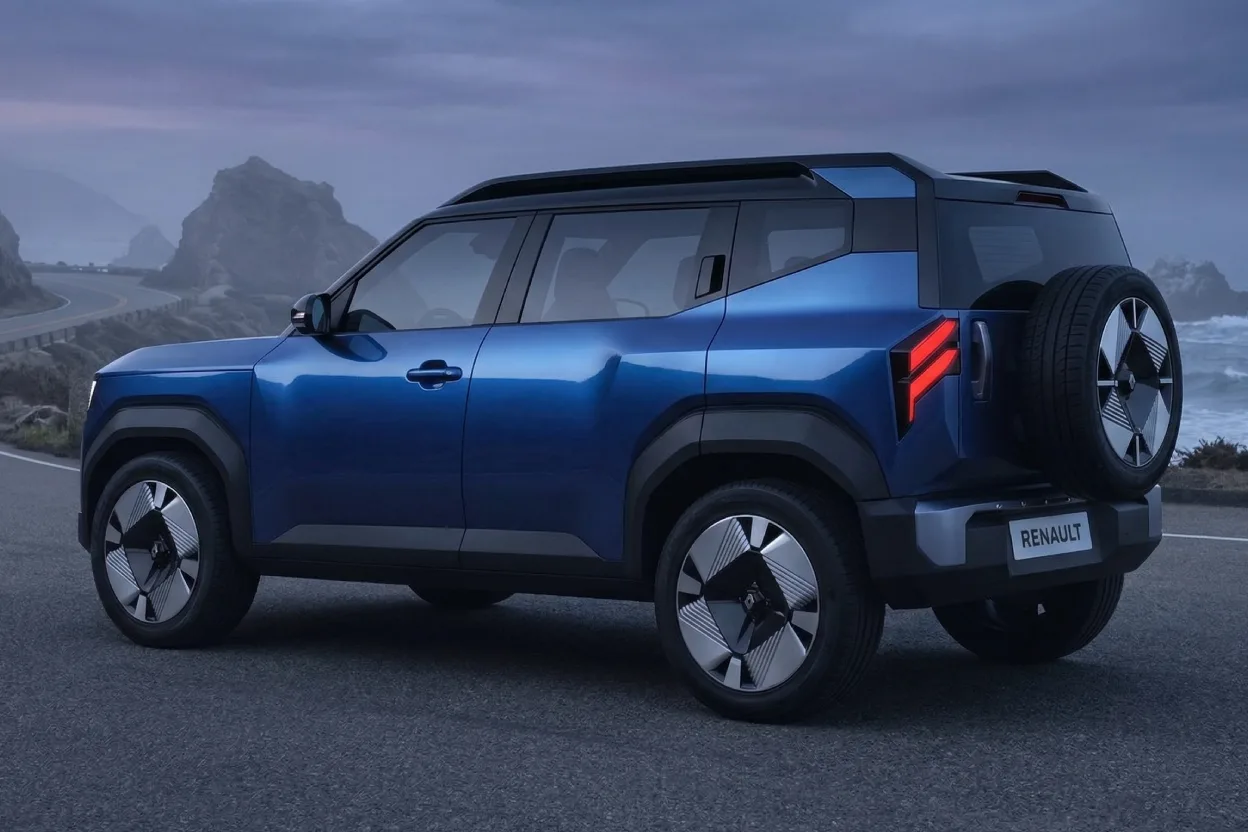
This is where things get interesting. Before the close of the current calendar year, Renault plans to launch a new sub-four-metre SUV — and the Bridger Concept that debuted recently gives us a pretty good look at the direction.
As per my opinion, the Bridger is Renault’s most strategically important concept in the Indian market in years. It’s built on the RGMP small modular platform, targets the compact SUV space directly above the Kiger, and comes with specs that the segment actually cares about: 200 mm ground clearance, 18-inch wheels, 200 mm of rear knee room, and 400 litres of boot space. That’s not bad for something with a compact footprint.
What makes it even more relevant is the powertrain flexibility. Renault says the Bridger will be offered with ICE, hybrid, and electric options depending on the market. For India specifically, I’d expect the ICE or mild hybrid variant to lead the charge initially, with the full EV option arriving only once charging infrastructure catches up in Tier 2 and Tier 3 markets.
Old Duster vs. New Duster: Has It Actually Moved Forward?
Since we’re talking about a model with genuine history in this market, a quick comparison is worth doing.
| Feature | Original Duster (2012–2019) | New Gen Duster (2025) |
|---|---|---|
| Platform | B0/M0 Platform | RGMP Platform |
| Engine Options | 1.5L Petrol / 1.5L Diesel | 1.2L Turbo Petrol + 1.8L Hybrid (later) |
| Ground Clearance | 205 mm | ~210 mm |
| Boot Space | 475 L | 410 L |
| Starting Price | ~Rs. 7.5 lakh | Rs. 10.49 lakh |
| AWD Option | Yes (select variants) | Likely not initially |
| Hybrid Option | No | Yes (arriving later this year) |
The original Duster’s diesel torque and AWD option were genuinely hard to match at that price. The new model sacrifices a bit of raw practicality (slightly smaller boot, no diesel) but gains refinement, better chassis dynamics, and eventually, a 1.8L strong hybrid system that should improve city fuel efficiency considerably. As per my knowledge of similar hybrid setups used in other Renault-Nissan Alliance vehicles, the system is proven and reasonably smooth in real-world driving.
Segment Comparison: Where Does Renault Stack Up?
In the compact SUV space, competition is not polite. Here’s how the Bridger concept’s targets sit against established rivals:
| Model | Length | Boot Space | Ground Clearance | Starting Price (Approx.) | Hybrid/EV Option |
|---|---|---|---|---|---|
| Renault Bridger (Concept) | Sub-4m | 400 L | 200 mm | TBA | Yes (ICE + Hybrid + EV) |
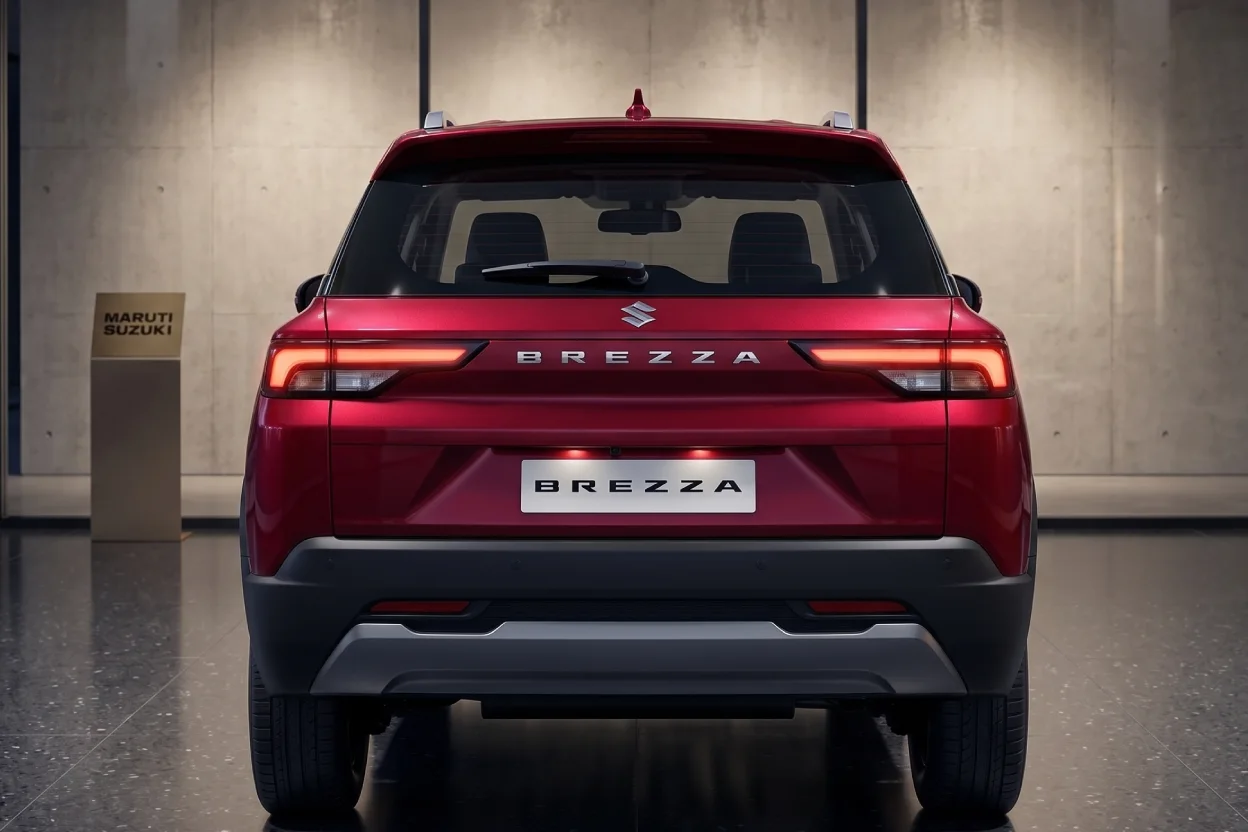
| Maruti Suzuki Brezza | 3,995 mm | 328 L | 188 mm | Rs. 8.34 lakh | Mild Hybrid |
| Tata Nexon | 3,993 mm | 350 L | 209 mm | Rs. 8.10 lakh | Yes (EV available) |
| Hyundai Venue | 3,995 mm | 350 L | 195 mm | Rs. 7.94 lakh | No full hybrid |
| Kia Sonet | 3,995 mm | 392 L | 211 mm | Rs. 7.99 lakh | No full hybrid |
If Renault can land the Bridger with strong hybrid availability at a competitive ex-showroom price, it has a real shot. The Nexon currently dominates partly because of its EV credibility and strong safety scores — Renault will need to match both. I would advise the brand to prioritise NCAP testing early and make those results public. In today’s market, safety ratings close deals.
The Hybrid Push: Smart or Late?
The 1.8L strong hybrid system arriving on the new Duster later this year is a signal that Renault is done just dipping its toes in. Strong hybrids — not mild hybrids, not just badge-jobs — meaningfully cut fuel consumption in city driving, which is exactly where Indian owners spend most of their time. The system will reportedly be shared across multiple models, which makes financial sense from a supply chain and parts commonality standpoint.
That said, I genuinely wonder if Renault is arriving at the hybrid party a couple of years behind where the market is heading. Toyota has had a stranglehold on the hybrid space in India through the Urban Cruiser Hyryder and Innova Hycross. Maruti’s mild hybrid system is everywhere. Renault will need to price the hybrid variant aggressively and communicate the real-world fuel savings clearly at the dealership level — because right now, many buyers still assume hybrid means expensive.
The Bigger Picture: India as a Manufacturing & Export Hub
Here’s what the product launches don’t immediately tell you — the more structurally important shift is Renault treating Indian manufacturing as a global asset, not just a local sales tool. Four models designed and assembled in India, including export-oriented ones like the Bridger, means R&D investment flowing in, localisation going up, and the supply chain getting deeper roots.
As per my opinion, this is the kind of commitment that takes time to show results but pays off significantly when the market scales. Renault has already put in fifteen years here. If the quality control on these new models is tight and the after-sales service network keeps improving, the next five years could look genuinely different for the brand.
An affordable locally-made EV also appears to be in early development. The details are thin right now, but if priced correctly and backed by a solid service network, it could find real traction in a market that’s increasingly EV-curious but still deeply price-sensitive.
The assembly line is being set up. The models are confirmed. Now Renault just needs to execute — and in India, execution is where most automakers eventually find out what they’re actually made of.