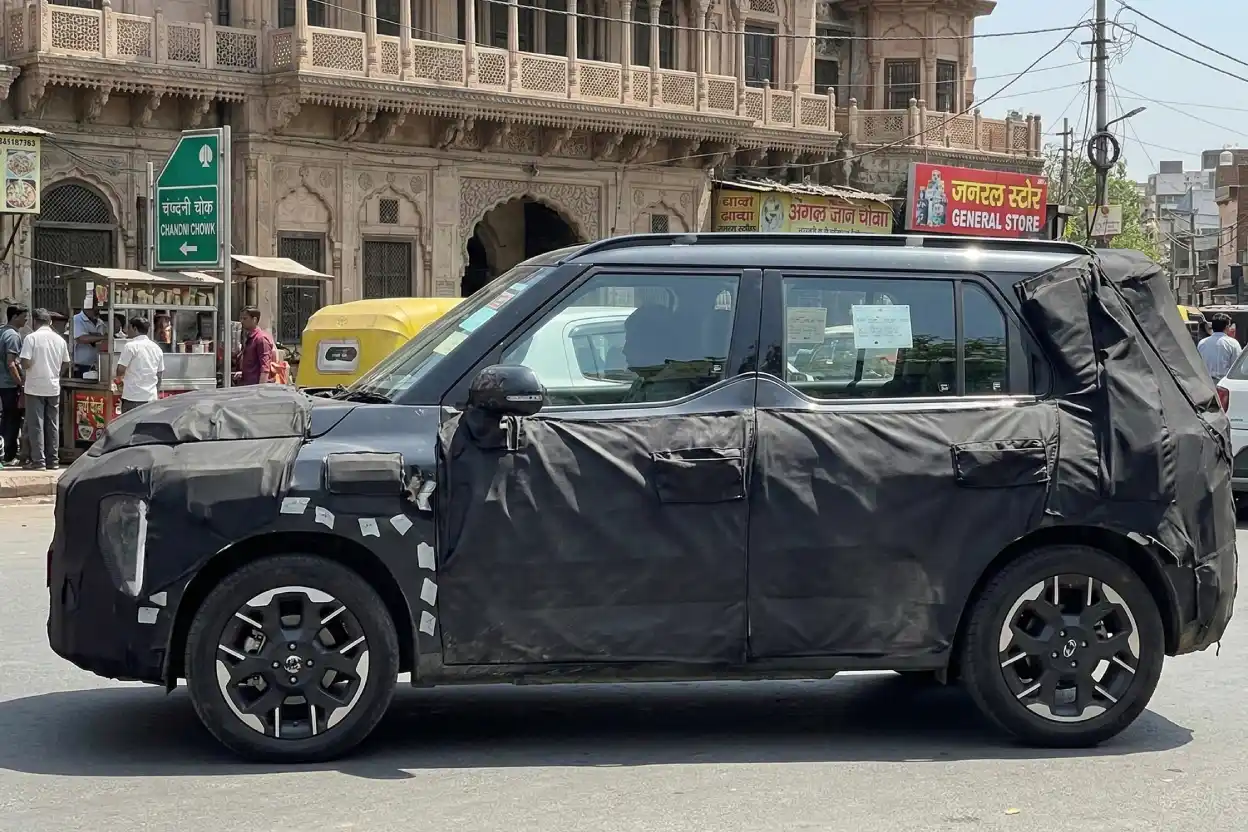
It feels like just yesterday we were marveling at the sheer audacity of the EV6’s design, yet here we are, watching the South Korean giant gear up for its fourth electric assault on Indian soil. As per my knowledge, the upcoming Kia Syros EV isn’t just another assembly line derivative; it represents a calculated tactical maneuver to dominate the “lifestyle” compact segment. Having spent considerable time tracking Kia’s evolution from the first-gen Seltos to the tech-heavy EV9, I’ve noticed a clear shift in their R&D focus toward what I call “utilitarian luxury.”
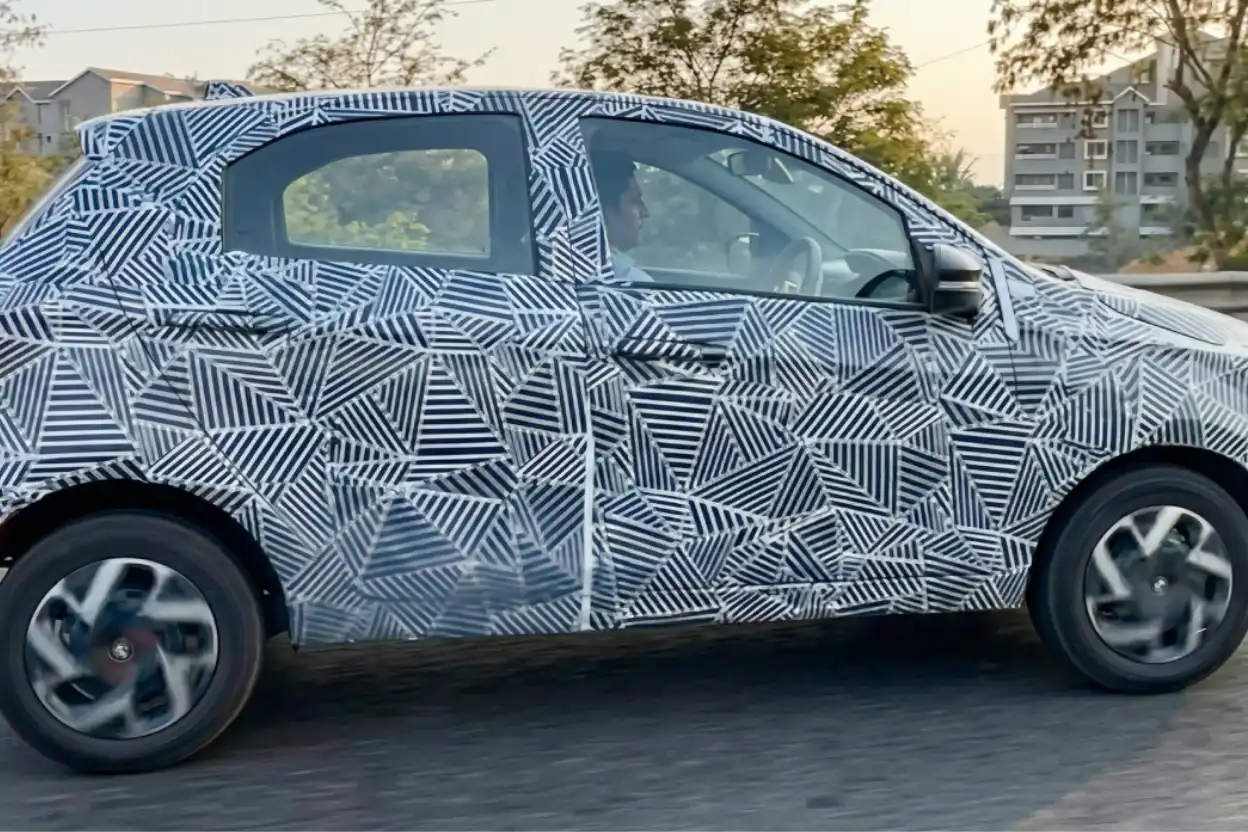
Recently, a heavily camouflaged prototype was spotted navigating the dusty peripheries of Anantapur. Given that this is where the automaker’s primary manufacturing hub breathes life into its chassis and body shop dreams, the sighting confirms that we are in the final stages of the prototype’s validation.
Design Evolution: Aerodynamics Over Aesthetics?
From my personal experience observing camouflage patterns, the Syros EV is trying desperately to hide a very assertive attempt at drag reduction. While the ICE (Internal Combustion Engine) variant demands airflow for its radiator, the EV version is likely to ditch the traditional tiger-nose grille for a smoothed-out fascia.
As per my opinion, the most intriguing detail is the potential for active flaps in the lower bumper. In the world of high-stakes quality control (SPC), every kilometer of range matters. These flaps stay shut to slice through the air and open only when the thermal management system screams for a cool breeze. Add to that the flush-fitted roof rails—a departure from the chunky rails on the standard model—and you have a vehicle designed by a wind tunnel.
Bridging the Gap: The Old Guard vs. The New Spark
To understand where the Syros EV sits, we have to look back at Kia’s early electric foray with the Soul EV (globally) compared to what we are seeing today.
| Feature | The “Old” Electric Era (e.g., Early Soul EV) | The New Syros EV Era |
| Battery Chemistry | Nickel Manganese Cobalt (NMC) | Exide-sourced LFP Cells (Local Sourcing) |
| Range Expectation | ~200 – 250 km | 475 – 500 km (Projected) |
| Charging Tech | Standard Uni-directional | Vehicle-to-Load (V2L) Bi-directional |
| Interior Tech | Analog/Digital Mix | Dual 12.3-inch Panoramic HD Displays |
I would advise enthusiasts not to overlook the local sourcing of LFP cells. By partnering with Exide Energy, Kia isn’t just building a car; they are stabilizing their supply chain against global volatility. This is a massive win for long-term maintenance and part replacement costs.
The Cockpit: More Than Just “Eco-Friendly”
Inside, I expect the Syros EV to push the boundaries of the “lounge on wheels” concept. As per my knowledge of Kia’s global design language, we are looking at a cabin that swaps greasy plastics for sustainable textures.
The dashcam with dual camera setup and Level 2 ADAS aren’t just marketing gimmicks—they are essential components in an increasingly chaotic driving environment. However, I am slightly concerned about the braking feel. Electric vehicles often struggle with a “mushy” pedal due to regenerative braking. Kia is countering this with paddle shifters to adjust regen intensity, which, in my experience, makes the transition from a traditional transmission-based vehicle much smoother for the driver.
Market Positioning: The Competition
The Syros EV won’t have a lonely walk to the top. It enters a shark tank filled with seasoned players like the Tata Curvv EV and the MG ZS EV.
| Specification | Kia Syros EV (Est.) | Tata Curvv EV | MG ZS EV |
| Battery Pack | Up to 50-60 kWh | 45 – 55 kWh | 50.3 kWh |
| Max Range | ~500 km | ~502 km | ~461 km |
| Sound System | 8-Speaker Harman Kardon | 9-Speaker JBL | 6-Speaker Premium |
| Key USP | V2L & Sliding Rear Seats | Coupe Styling | Largest Panoramic Sunroof |
| Safety | 6 Airbags + ADAS L2 | 6 Airbags + ADAS L2 | 6 Airbags + ADAS L2 |
My Critical Take: Is it Enough?
I’ll be honest—I’m slightly worried about the financing and price bracket. With the inclusion of ventilated rear seats (a rarity in this segment) and high-end Harman Kardon audio, the Syros EV is treading dangerously close to the pricing of the larger Seltos.
I would advise potential buyers to wait and see how the suspension is tuned. EVs are inherently heavier due to the battery weight on the axles, and if the R&D team hasn’t accounted for Indian potholes with a robust shocker and strut setup, the ride might feel jittery.
However, the “calculated tactical maneuver” here is the V2L (Vehicle-to-Load) capability. Imagine being at a remote campsite and using your car to power a coffee maker or a laptop. That is the kind of “lifestyle” appeal that shifts units in the modern dealership.