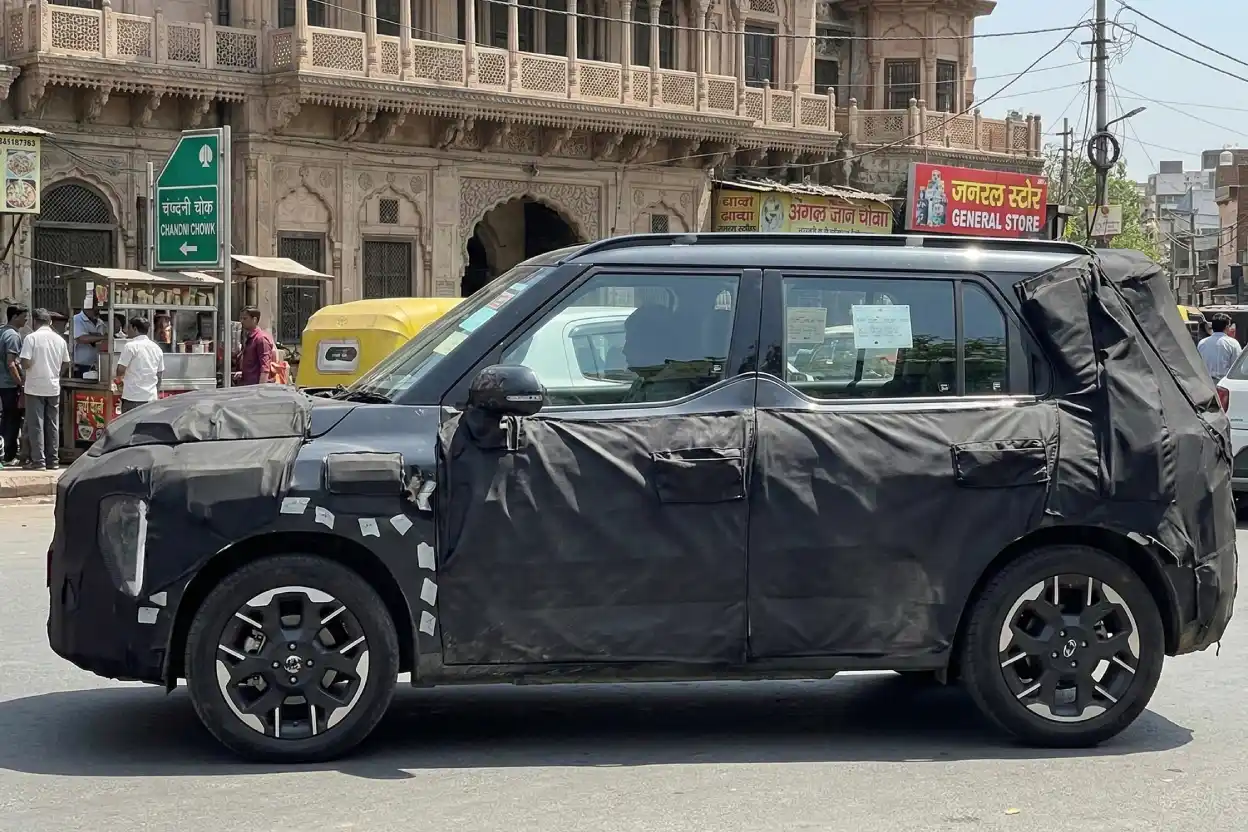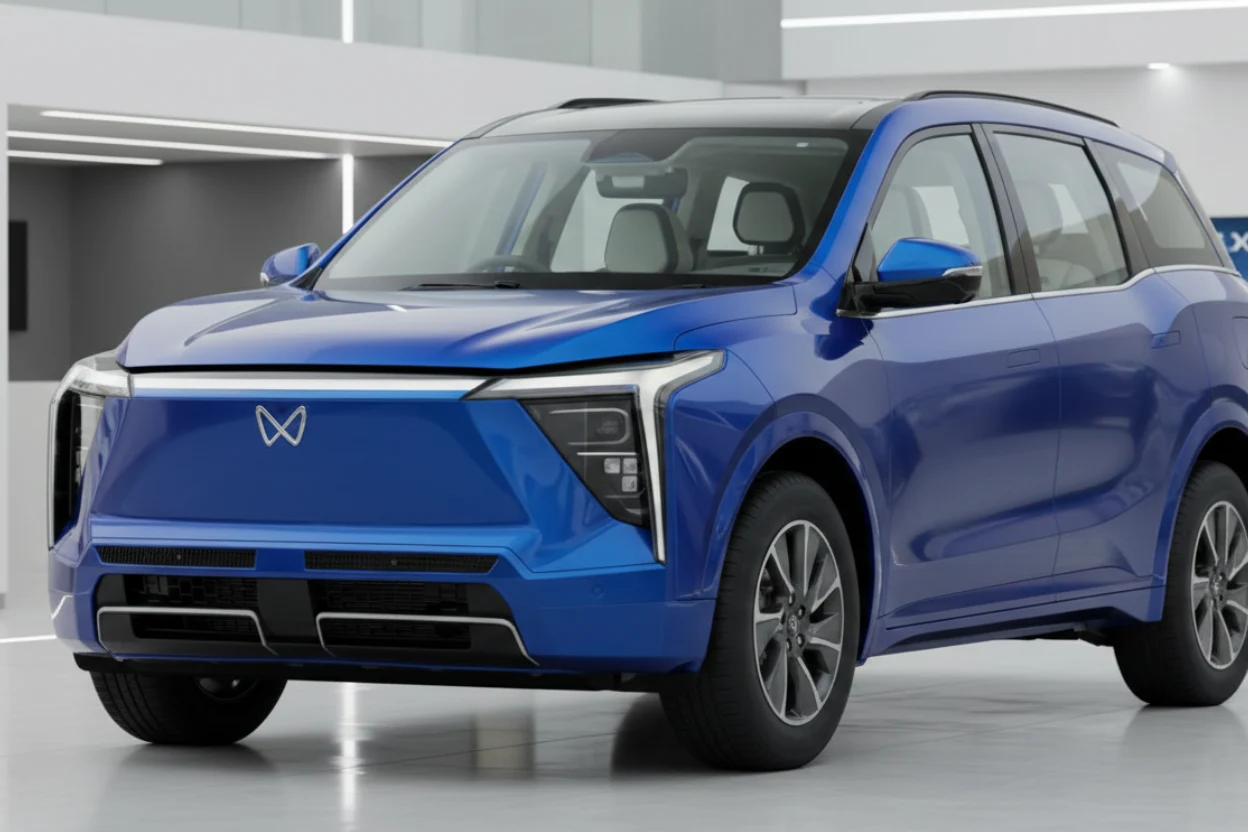
In the traditional world of manufacturing, an automaker usually waits for a mid-life facelift—typically three years down the line—to tweak the mechanical DNA of a vehicle. However, Mahindra is proving that the age of the “Software Defined Vehicle” (SDV) has truly arrived in India. Just one month after the first set of Mahindra XEV 9S units rolled off the assembly line and into customer driveways, the marque has released a significant performance update.
As per my knowledge, this move wasn’t a random corporate whim. It was an assertive attempt to address feedback from the first wave of automotive journalists and early adopters who found the pre-set drive modes a bit too rigid. Enter the new ‘Custom’ Drive Mode, a calculated tactical maneuver designed to silence critics and give the XEV 9S a competitive edge in a segment that is becoming increasingly crowded.
The Engineering Deep Dive: What is ‘Custom’ Mode?
My personal experience with Mahindra’s previous EV prototypes suggested that their R&D department was obsessed with versatility. This new update brings that obsession to the production model. Unlike the standard “Range” or “Race” modes—which lock the vehicle into specific maps for acceleration, braking, and suspension—the Custom mode acts as a digital playground.
If you are driving on a patchy suburban road but want the punchy torque of the 210 kW rear motor, you can now set the drive unit to ‘Race’ while keeping the adaptive dampers in ‘Comfort.’ This prevents the chassis from feeling overly stiff over potholes while maintaining the 380 Nm of instantaneous thrust.
Important Note: I would advise potential buyers to note that this specific update is hardware-dependent. The Custom mode is exclusive to the Pack Three and Pack Three Above trims. Why? Because these high-end variants are equipped with sophisticated adaptive dampers that can actually change their valving based on digital inputs. The lower trims with passive dampers simply don’t have the components to support this level of granular adjustment.
Evolution of the Marque: Old School vs. New School
To appreciate the leap Mahindra has made, we must look at where they started. The XEV 9S isn’t just a successor to their early electric attempts; it is a total reinvention of the brand’s chassis philosophy.
| Feature | Mahindra eVerito (The Ancestor) | Mahindra XEV 9S (The Current Flagship) |
| Powertrain | 3-Phase AC Induction Motor | Permanent Magnet Synchronous Motor (LFP) |
| Battery Tech | ~21 kWh Li-ion | Up to 79 kWh LFP |
| Real-World Range | ~110 km | Up to 679 km (MIDC) |
| Suspension | Basic MacPherson Strut | Independent with Adaptive Dampers |
| Transmission | Single-speed Direct Drive | Advanced Integrated Drive Unit |
| Connectivity | Virtually None | OTA Updates & SDV Architecture |
The contrast is staggering. While the eVerito felt like a prototype rushed to the dealership, the XEV 9S feels like a product of rigorous quality control (SPC) and a modern supply chain. The transition from a “car with a battery” to a “computer on wheels” is complete.
Segment Rivalry: How the XEV 9S Stacks Up
The mid-size electric SUV space is no longer a monopoly. With prices ranging from ₹19.95 Lakh to ₹29.45 Lakh, the XEV 9S is gunning for the undisputed leaders. In my opinion, the introduction of the Custom mode is a direct response to the driving dynamics offered by global competitors.
| Model | Battery Size (Max) | Power Output | Max Range (Claimed) | Key Advantage |
| Mahindra XEV 9S | 79 kWh | 282 hp | 679 km | Custom Drive Modes & Ground Clearance |
| Tata Curvv.ev | 55 kWh | 167 hp | 585 km | Design & Brand Trust |
| MG ZS EV | 50.3 kWh | 176 hp | 461 km | International Pedigree |
| Hyundai IONIQ 5 | 72.6 kWh | 225 hp | 631 km | Ultra-fast Charging (800V) |
While the IONIQ 5 sits in a more premium price bracket, the XEV 9S is punching upward by offering similar horsepower figures and superior range on the 79 kWh LFP pack.
Analytical Concerns: Too Much, Too Soon?
While I applaud the speed of this update, I am also slightly concerned. As someone who keeps a close eye on the automotive supply chain and dealership service levels, I have to ask: Is the software being tested thoroughly enough before reaching the customer?
Rolling out a “drive-feel” update just 30 days after sales start suggests that the initial calibration might have been rushed through the final R&D phase. I would advise owners to stay in close contact with their local repair shop or dealership to ensure that the OTA (Over-The-Air) installation doesn’t interfere with other safety systems like the Level 2 ADAS or the catalytic converter-free thermal management system.
Furthermore, the complexity of having three different battery sizes (59 kWh, 70 kWh, and 79 kWh) across multiple “Packs” might confuse the average consumer looking for simple financing or leasing options. It creates a nightmare for parts inventory at the service station.
The Bottom Line
The Mahindra XEV 9S is a bold statement. It’s a vehicle that isn’t afraid to evolve in real-time. By giving drivers the ability to decouple steering weight from motor response, Mahindra is catering to the “pro-driver” demographic that usually shops at much higher price points.
If you are looking for a car that feels different every time you leave the car wash, this might be it. However, if you prefer a “set it and forget it” experience, the sheer number of configurations might feel overwhelming.