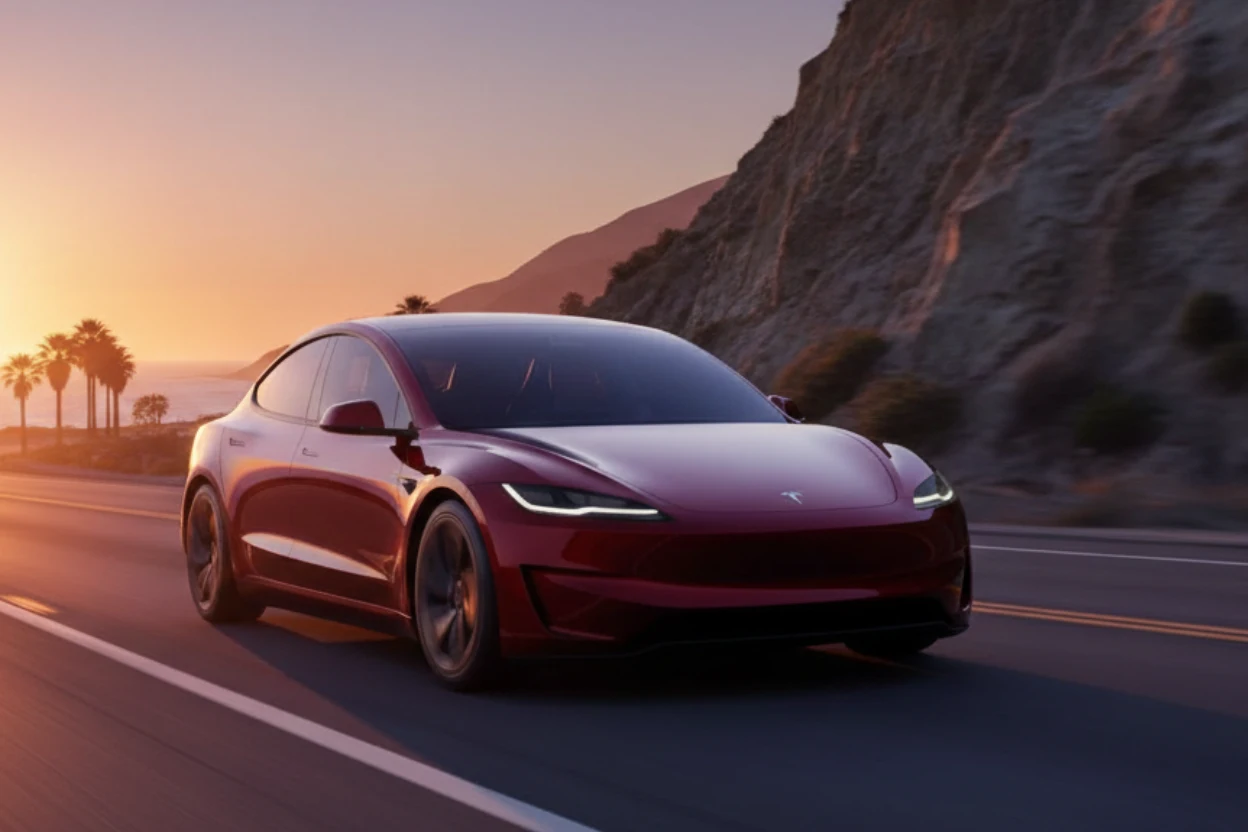
The automotive landscape is currently suffocating under a tidal wave of heavy, expensive electric crossovers. While every automaker seems obsessed with bloating their assembly lines with high-riding SUVs, the humble sedan remains the undisputed leader in balancing physics with fiscal reality. In my personal experience, there is a distinct “sweet spot” where range, aerodynamics, and affordability intersect—and remarkably, it’s an American marque holding the line.
The Tesla Model 3 has become a fascinating case study in calculated tactical maneuvers. Despite a recent comprehensive update that nudged its price northward, it continues to devour market share, often outperforming seasoned internal combustion engine (ICE) veterans like the Toyota Corolla and Honda Civic in quarterly sales. But the real story isn’t the delivery numbers; it’s the longevity. As per my knowledge, the Model 3 is proving to be a “200,000-mile car,” challenging the critical concern that EVs are merely high-tech appliances with a short shelf life.
Engineering Longevity: Simplicity as a Virtue
Traditional gasoline engines are marvels of complexity, relying on a symphony of parts—carburetors (in older legends), pistons, catalytic converters, and intricate transmissions—that all eventually succumb to heat and friction. In contrast, the Model 3’s chassis houses a powertrain with a fraction of the moving parts.
According to reliability data, the 2025 Model 3 currently sits at the top of the family EV segment with a 7.2/10 reliability score from iSeeCars. This isn’t just marketing fluff; it’s a reflection of a manufacturing process that has moved toward “gigacastings” and simplified drive units. I would advise skeptics to look at the secondary market: these vehicles are retaining value (7.6/10) because the “fuel” system—the battery and motors—is designed for a marathon, not a sprint.
The Evolution: Model 3 vs. The “Early Adopter” Era
To appreciate the current model, we must look back at the early days of the mass-market EV. Before the Model 3 hit the assembly line in earnest, the “affordable” EV segment was dominated by vehicles that felt more like prototypes than daily drivers.
| Feature | The “Old” Guard (e.g., 2011 Nissan Leaf) | The Current Standard (2025 Model 3) |
| Battery Tech | Air-cooled (prone to rapid degradation) | Liquid-cooled (active thermal management) |
| Realistic Range | ~73 – 100 Miles | Up to 363 Miles |
| Performance | Sluggish acceleration | 0-60 MPH in as little as 2.9 seconds |
| Charging | Slow “trickle” speeds | V3/V4 Supercharging (250kW+) |
The difference is night and day. While older EVs often required a “tune-up” of their entire battery chemistry after 80,000 miles, the Model 3 is backed by an eight-year/120,000-mile powertrain warranty. Tesla even guarantees the battery will retain 70% of its capacity over that decade-long stretch.
Benchmarking the 2025 Performance Hierarchy
The Model 3 isn’t just one car; it’s a tiered approach to the driving experience. Whether you prioritize the “hypermiling” efficiency of the Long Range RWD or the neck-snapping acceleration of the Performance trim, the numbers remain assertive.
As the table illustrates, the 2025 lineup offers a broad spectrum of utility. My personal opinion? The Long Range Rear-Wheel Drive is the true “hero” of the bunch. With a 363-mile range and an annual electricity cost of just $550, it represents a level of efficiency that makes a gas station visit feel like a primitive ritual. You’re essentially spending 92 cents to drive 25 miles—a figure no ICE sedan can touch.
Behind the Wheel: Minimalism or Austerity?
Stepping into the cabin, you are met with a layout that is polarizingly minimalist. A singular 15.4-inch digital screen commands the dashboard, controlling everything from the climate control vents to the glovebox release. While some critics find this “too digital,” from a manufacturing and repair shop perspective, it’s brilliant. Fewer physical buttons mean fewer wiring harnesses and mechanical failures over a 15-year lifespan.
Despite the sleek exterior, the interior measurements are surprisingly practical:
-
Front Legroom: A generous 42.7 inches.
-
Cargo Versatility: Between the 19.8 cubic-foot trunk and the 3.1 cubic-foot “frunk,” you have more storage than many mid-size luxury marques.
-
Acoustic Refinement: The inclusion of acoustic glass roof panels and a 17-speaker audio system pushes the Model 3 into the premium territory, despite its entry-level aspirations.
The Critical Concern: The Cost of Ownership
I am often asked if the $42,490 starting price is “too high” for a sedan. It’s a valid question. However, when you factor in the five-year fuel savings—estimated at roughly $5,750 for the base model—the math starts to tilt in favor of the EV. Furthermore, the lack of traditional maintenance (no oil changes, no spark plugs, no timing belts) reduces the “tune-up” anxiety that plagues 100,000-mile ICE vehicles.
I would advise potential buyers to look closely at the “Retained Value” scores. Because these cars can comfortably cross the 200,000-mile threshold with original components like the axle and suspension mostly intact, they don’t depreciate like a rock the moment they leave the dealership.
Predictive Outlook: A Future Without Gas Stations?
As the supply chain for batteries continues to mature and R&D costs are amortized, the Model 3 stands as a prototype for the future of the American automaker. It isn’t just about being “green”; it’s about building a machine that outlasts its owner’s financing or leasing term. By 2028, I predict we will see the first massive wave of “high-mileage” Model 3s hitting the used market with 250,000+ miles, finally silencing the critics of EV durability.
The Model 3 has proven that you don’t need a complex engine or a thirsty carburetor to build a legendary car. You just need a solid chassis, intelligent software, and a commitment to quality control that prioritizes the long game.