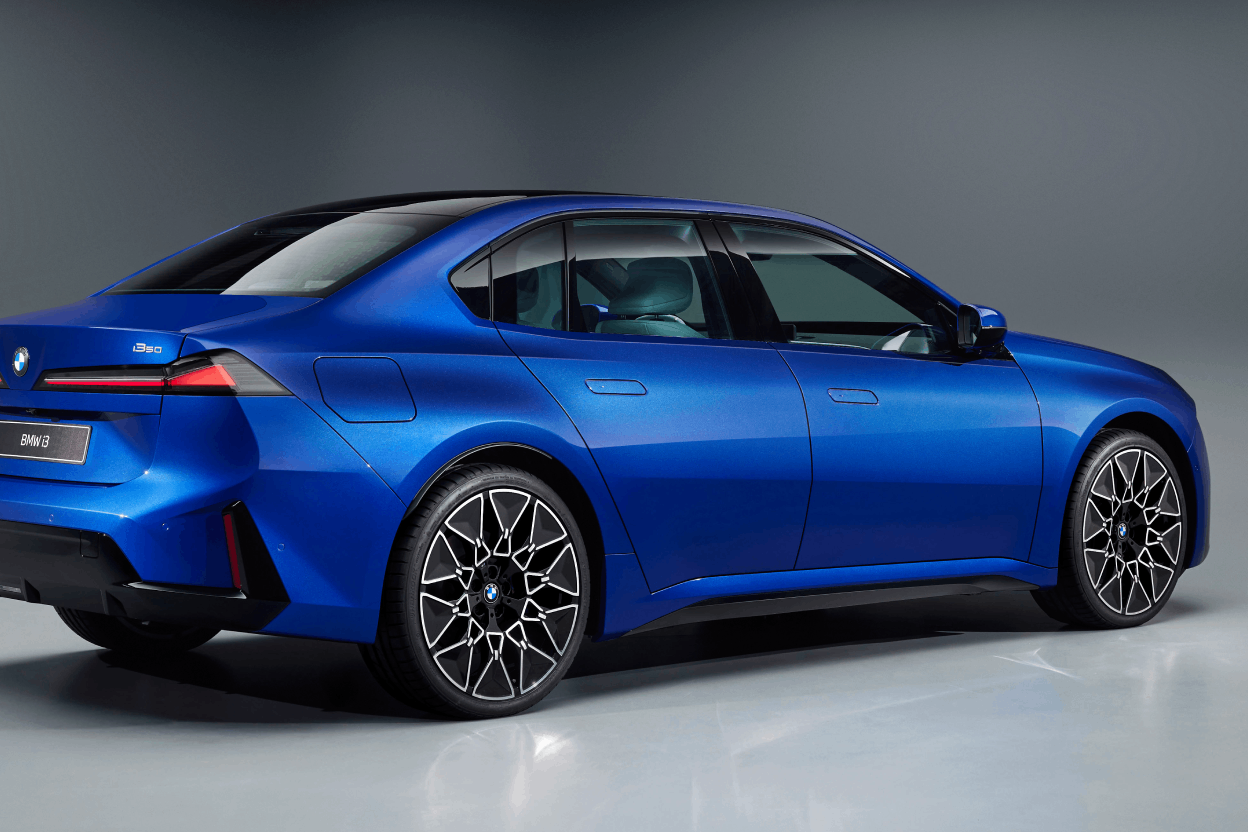
BMW has brought back the i3 name. But if you drove the original — that quirky, carbon-bodied, rear-engined little city EV with suicide doors and an optional motorcycle engine bolted on for emergencies — what’s coming in 2027 will feel like a completely different universe. Same badge. Completely different animal.
As per my opinion, this is either a bold strategic statement from BMW or a marketing shortcut. Maybe both.
Why the name change matters more than BMW is admitting
The original BMW i3, which ran from 2013 to 2022, was genuinely unusual. It was built on a carbon fibre reinforced plastic passenger cell sitting on an aluminium chassis — a construction approach that was expensive, experimental, and unlike anything else on an assembly line at the time. The rear-wheel-drive layout, the optional range-extender engine (a 650cc two-cylinder borrowed from a BMW motorcycle), the coach-built rear doors that opened backward — all of it said this is a car for someone who actively wants something different.
It sold reasonably well for what it was. A niche product with a genuine following.
The 2027 BMW i3 50 xDrive shares none of that. Different platform, different proportions, different philosophy, different buyer. As per my knowledge, the only thread connecting them is the badge — and BMW’s clear desire to associate the new model with the brand’s EV origin story rather than starting completely fresh.
Whether that’s honest positioning or badge recycling is a fair question. I lean toward the latter, but the car itself may prove the move justified.
Old vs new: just how different are they?
Here’s a direct comparison to show the generational gap between the original i3 and the incoming model:
| Feature | BMW i3 (2013–2022, original) | BMW i3 50 xDrive (2027, new) |
|---|---|---|
| Body style | Compact hatchback / city car | Compact sedan (3 Series-based) |
| Drivetrain | Rear-wheel drive | All-wheel drive (xDrive) |
| Motors | Single rear electric motor | Dual electric motors |
| Output | 170–184 HP (depending on year) | 463 HP |
| Torque | 184 lb-ft | 476 lb-ft |
| Battery | 22–42.2 kWh (generation dependent) | New 800V cylindrical cell pack |
| EPA range | 81–153 miles (gen dependent) | 440 miles (BMW projected) |
| Chassis material | CFRP + aluminium | Neue Klasse platform (steel/aluminium) |
| Charging architecture | AC + DC CCS (max ~50 kW) | 800V DC (up to 400 kW) |
| Range extender option | Yes (early models) | No |
| 0-60 mph | ~7.2 seconds | Expected ~4.0 seconds |
| Starting price | ~$42,000 (at launch) | Expected ~$50,000–$62,000 (estimated) |
The performance jump alone is staggering. Going from 170 horsepower and 81 miles of range to 463 horsepower and a projected 440 miles of range isn’t an update — it’s a complete reinvention.
From my personal experience spending time with the original i3 in urban traffic, it was genuinely charming in the right environment. Light, responsive, easy to park. But the range anxiety was real. Even the later 42 kWh battery version barely managed 150 real-world miles. Planning longer drives required a Google Maps audit of charging locations. That was the original i3’s honest ceiling.
The new one is built to remove that ceiling entirely.
440 miles: believable or marketing theatre?
Range claims from automakers deserve scrutiny. The EPA number is usually where the reality check happens, and BMW hasn’t released that yet — only its own projection of 440 miles.
That said, the engineering basis for the number is credible. The new i3 runs BMW’s sixth-generation eDrive system on 800-volt architecture with cylindrical battery cells in a cell-to-pack configuration. For those unfamiliar with what that means in practical terms: conventional battery packs house cells inside modules, which then slot into the pack. Cell-to-pack removes the modular layer entirely — cells go straight into the structural pack. You lose some thermal management flexibility but gain significant energy density. More usable energy per kilogram of battery weight.
BMW also claims a 30% range improvement versus the fifth-generation eDrive architecture. Combined with more efficient motors and a body designed with aerodynamic drag reduction in mind, 440 miles becomes plausible — not guaranteed, but not fantasy either.
Charging speed is the other number worth watching. The 400-kW DC charging capacity is class-leading if the infrastructure supports it. BMW says it charges 30% faster than the previous generation on compatible chargers. In practical terms, that should mean a meaningful charge in roughly 15-20 minutes on a capable DC fast charger. The car also supports bidirectional charging — vehicle-to-home, vehicle-to-grid, and vehicle-to-load functions — which adds genuine practical value for buyers who want their car to work as a home energy buffer.
I would advise anyone holding off on an EV purchase specifically because of range anxiety to watch the i3’s independent range tests closely when they arrive later this year.
Performance and chassis: this is still meant to be a BMW
463 horsepower. 476 lb-ft of torque. Those are numbers that need a moment to process on a family sedan.
BMW’s new Heart of Joy high-performance computer manages drive, braking, and certain steering functions at ten times the response speed of the previous generation control systems. The stated goal is cornering that feels more precise with fewer stability interventions jumping in uninvited. Anyone who’s driven a modern BMW with aggressive stability control will understand why that last part matters.
The chassis underneath is new too. A five-link rear axle replaces the older setup, with standard stroke-dependent shock absorbers handling everyday driving and an optional Adaptive M suspension for buyers who want more control over the car’s character. The suspension tuning can meaningfully change how a car feels through corners and over surface imperfections — this kind of adjustability in a production sedan used to be reserved for significantly more expensive vehicles.
The battery pack’s low mounting position gives the i3 a lower centre of gravity than any combustion-powered 3 Series. As per my knowledge, this kind of mass distribution is one of the genuine handling advantages EVs carry over equivalent petrol cars, and BMW’s chassis engineers have clearly built the car to exploit it.
Whether it drives as well as BMW is promising is something only a road test will confirm. The engineering intent is pointed squarely at Tesla’s Model 3 Performance and the Mercedes EQE, and the spec sheet is competitive with both.
Segment comparison: where the new i3 sits
| Feature | BMW i3 50 xDrive (2027) | Tesla Model 3 Performance | Mercedes EQE 350+ | BMW i4 M50 |
|---|---|---|---|---|
| Segment | Compact luxury sedan | Compact sedan | Midsize luxury sedan | Compact luxury sedan |
| Horsepower | 463 HP | 510 HP | 288 HP | 536 HP |
| Torque | 476 lb-ft | 471 lb-ft | 417 lb-ft | 586 lb-ft |
| EPA range (est.) | 440 miles | 315 miles | 260 miles | 227 miles |
| 0-60 mph | ~4.0 sec (est.) | 2.9 sec | 5.9 sec | 3.7 sec |
| Battery architecture | 800V | 400V | 400V | 400V |
| Max DC charge rate | 400 kW | 250 kW | 170 kW | 210 kW |
| Bidirectional charging | Yes | No (V2H coming) | No | No |
| Est. base price | ~$50,000–$62,000 | $58,990 | $74,900 | $67,900 |
The range number, if it holds up under EPA testing, is the i3’s most assertive argument. Tesla’s Model 3 Performance is the obvious target, and on range alone, the i3 has a significant projected advantage. The Model 3 Performance wins on outright acceleration. The EQE is a bigger, softer car playing in a slightly different role. The i4 M50 is the internal competitor — more power, less range, higher price.
Pricing: the one missing piece
BMW hasn’t announced a price. What we know is that the combustion 330i xDrive starts at $50,000, and the all-wheel-drive i4 stickers at $62,300. The i3 50 xDrive is more powerful than the i4 and claims considerably more range. Logic suggests it lands somewhere between $55,000 and $65,000 — but that’s reading the tea leaves.
I would advise buyers not to lock in any expectations until the official price drops closer to the fall launch. BMW’s pricing decisions on the Neue Klasse platform will set the tone for the brand’s EV positioning for the better part of this decade. They know what’s at stake.
Production starts in Munich this August
BMW will begin assembly line production of the new i3 at its Munich plant in August 2026, with first deliveries expected in autumn. That’s soon enough that the car is no longer a concept or a prototype — it’s a real production vehicle approaching the supply chain finalisation phase.
The development cycle on the Neue Klasse has been long and well-publicised. BMW spent years on platform R&D, battery cell engineering, and software integration. The i3 is the production payoff of that investment.
For all the valid questions about naming confusion and whether the badge choice respects the original car’s legacy — the underlying machine looks serious. If the range number survives independent testing and the driving dynamics deliver on BMW’s promises, this will be a genuinely competitive entry in a segment where Tesla has been largely unchallenged for years.
That, more than any name debate, is what matters.