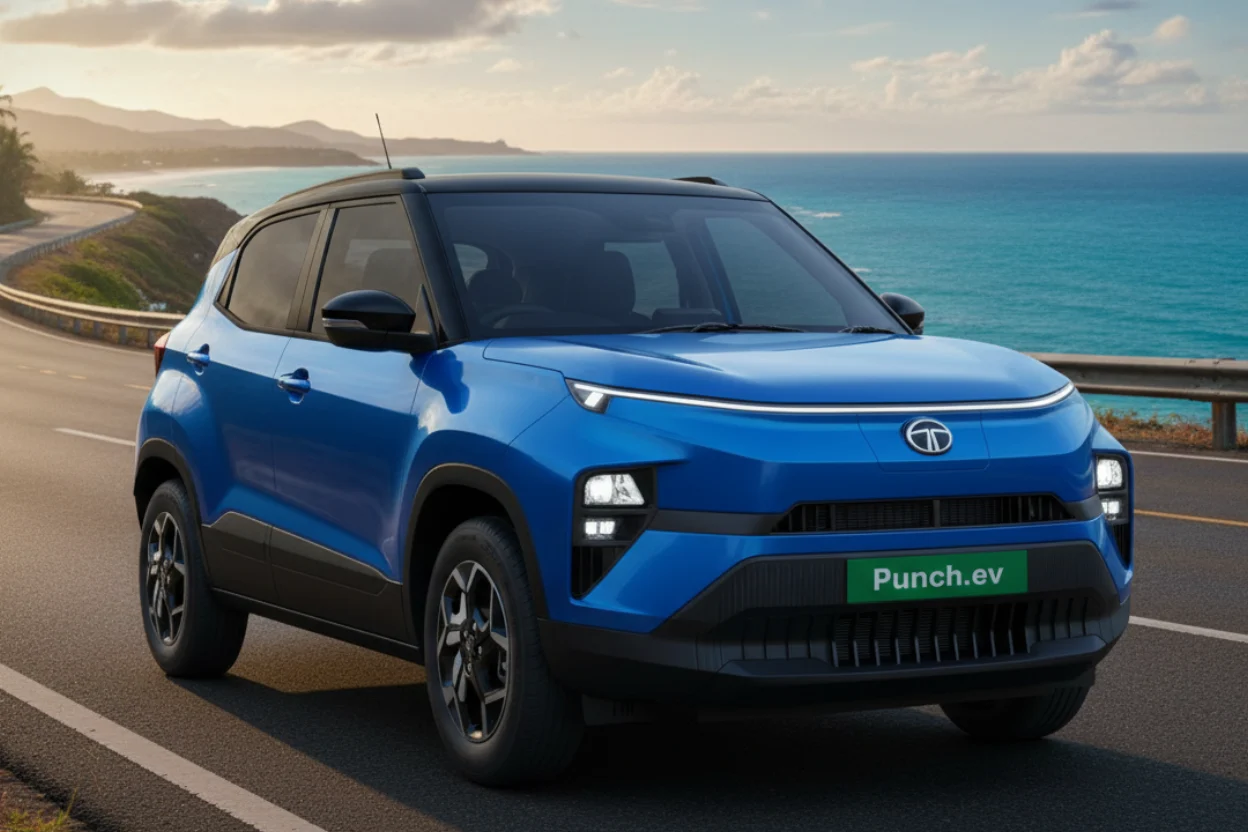
It feels like just yesterday that the Tata Punch EV first hummed onto the scene, yet the fast-moving automaker is already pulling the trigger on a refreshed version. Mark your calendars for February 20th, as the updated electrified model is set to make its official debut. This move comes hot on the heels of the internal combustion engine (ICE) Punch facelift, proving that Tata’s R&D department is operating at a breakneck pace to maintain its status as the undisputed leader in India’s entry-level EV space.
While the original ICE Punch has been a staple in the body shop since 2020, the EV iteration only arrived in January 2024. Seeing a facelift so soon—barely a year into its lifecycle—is a calculated tactical maneuver by Tata to harmonize the design language across their entire supply chain of micro-SUVs.
Aesthetics & Overhaul: What’s Changing?
As per my knowledge, the exterior changes will largely mirror the aggressive, “sharpened” look we’ve seen on the latest Nexon and Curvv. Expect a revised fascia that ditches the slightly bulbous look of the outgoing prototype for a more streamlined, “tech-forward” aesthetic.
My personal experience with the current Punch EV suggests that while the front end was already modern, the rear felt a bit dated. Tata is addressing this by introducing connected LED tail lamps, which should significantly enhance the car’s presence when you see it from behind at a traffic light. Additionally, a fresh set of aero-optimized wheels will likely debut, aimed at reducing drag and perhaps squeezing out a few extra kilometers of real-world range.
Inside the cabin, the general layout of the chassis-mounted components remains the same, but I anticipate a more premium feel. We’re likely looking at updated upholstery and perhaps a more responsive touchscreen interface. I would advise potential buyers to keep an eye on the software—Tata has a history of “moody” infotainment systems, and this facelift is the perfect opportunity for them to iron out those digital gremlins.
A Comparison: Outgoing vs. Facelifted Punch EV
It’s worth noting how quickly the marque has evolved. Let’s look at how the upcoming version stacks up against the current assembly line favorite.
| Feature | Current Tata Punch EV | Upcoming 2026 Facelift |
| Front Fascia | Divided light setup | Harmonized Slim LED Strip |
| Rear Profile | Standard Halogen/LED mix | Connected LED Tail Lamps |
| Wheels | Current 16-inch Alloys | New Aero-Pattern Alloys |
| Interior Vibe | Functional / Dual Tone | Premium Upholstery / Refined UI |
| Launch Timing | January 2024 | February 20th, 2026 |
Mechanicals: If It Ain’t Broke…
Underneath the fresh skin, the transmission and battery architecture are expected to remain largely untouched. The vehicle will continue to offer the 25 kWh and 35 kWh battery packs. As per my opinion, this is a sensible move. The current quality control (SPC) on these packs has been relatively stable, and major mechanical overhauls so soon would likely drive up financing and insurance costs for the end consumer.
The max claimed range currently stands at 421 km (MIDC). While I don’t expect a massive jump, I am curious—and slightly concerned—to see if the new aerodynamic tweaks will allow Tata to claim a slightly higher number to stay ahead of the competition. Even a 5% increase in efficiency through software optimization of the motor’s power delivery would be a win for daily commuters.
Segment Rivalry: The Micro-EV Battle
The Punch EV doesn’t exist in a vacuum. It sits in a unique “micro-SUV” niche, but it faces heat from hatchbacks and upcoming competitors in the sales/service network.
| Specification | Tata Punch EV (Facelift) | Citroen eC3 | MG Comet EV |
| Battery Pack | 25 – 35 kWh | 29.2 kWh | 17.3 kWh |
| Peak Power | ~122 HP (Long Range) | 57 HP | 42 HP |
| Ground Clearance | 190 mm | 170 mm | 164 mm |
| Drive Feel | SUV-like / High Seating | Supple / Hatchback | Quirky / Urban |
| Est. Price (OTR) | ₹11 – ₹16 Lakh | ₹13 – ₹14 Lakh | ₹7 – ₹10 Lakh |
Predictive Analysis: Pricing & Market Impact
The current Punch EV is priced between Rs. 10.39-15.31 Lakh (OTR Mumbai). I predict that Tata will implement a “marginal” price hike—perhaps in the range of ₹15,000 to ₹30,000—to justify the added tech and aesthetic updates.
However, there is a risk here. With the dealership floors getting crowded with options like the MG Windsor and Tata’s own Nexon EV (which often sees aggressive discounting), the Punch EV Facelift needs to be priced perfectly. If the top-end variant creeps too close to the ₹16 lakh mark, buyers might just jump to the larger Nexon.
I would advise looking for “pre-facelift” stock at your local repair shop or dealer if you’re on a budget. There are bound to be massive clearance discounts on the outgoing model as the automaker clears space for the new units arriving in late February.
The Verdict So Far
The Tata Punch EV Facelift is an assertive attempt to keep the car looking fresh in a market that has a very short memory. While the mechanical bits stay the same, the visual and feature upgrades are welcome. For the city dweller looking for high ground clearance and zero tailpipe emissions, this remains the most logical choice on the market.