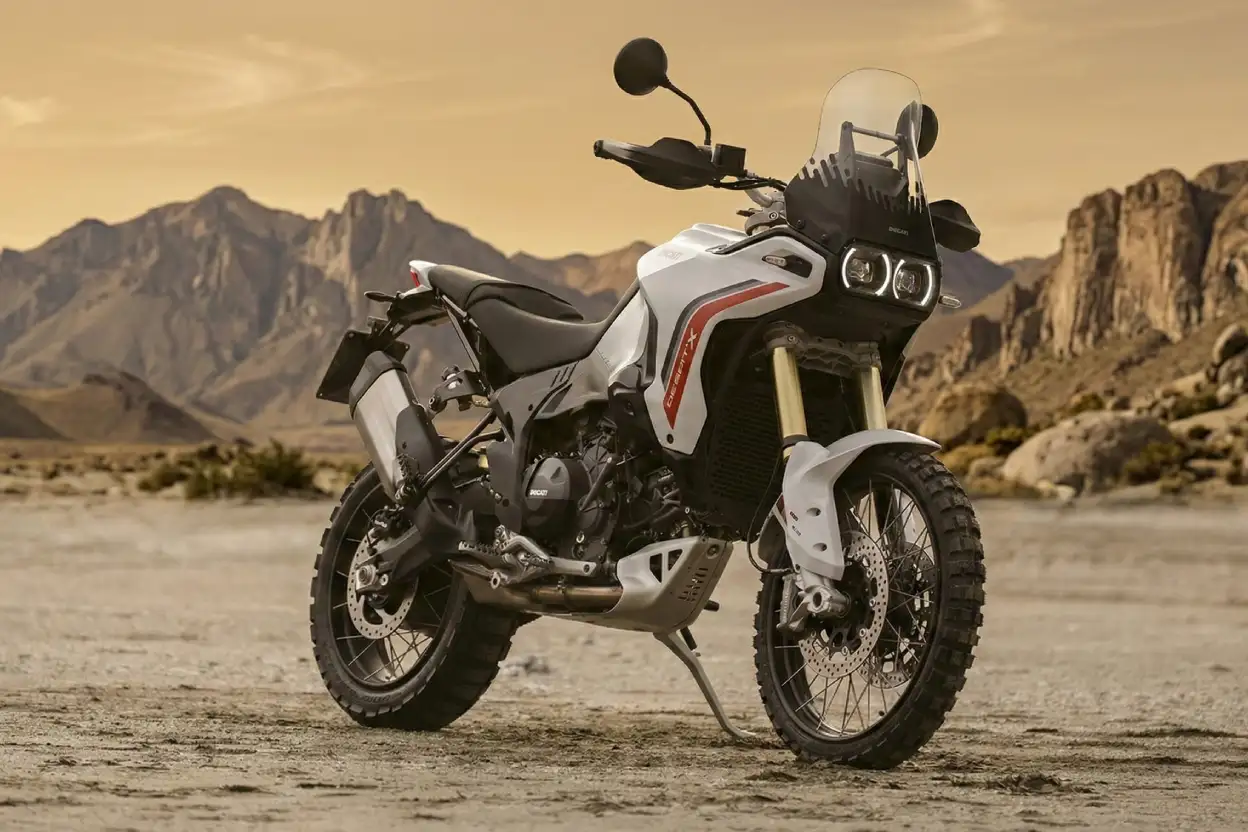
The dust has finally settled on the Ducati World Premiere 2026, and the Borgo Panigale automaker has laid its cards on the table. The 2026 Ducati DesertX isn’t just a mid-cycle refresh; it’s a comprehensive mechanical overhaul that signals a shift in how Ducati views the “Travel Enduro” segment. As someone who has spent significant time wrestling the previous generation through technical single-tracks and droning highway stretches, I find this new iteration both exhilarating and, frankly, a bit concerning for the competition.
The Heart of the Matter: The New V2 Powerplant
As per my knowledge of Ducati’s recent R&D trajectory, the transition to this new 890cc V-twin was inevitable but remains a bold move. Producing 108bhp at 9,000rpm and 92Nm of torque, the sheer numbers don’t tell the full story. In my personal experience with the older 937cc Testastretta, the engine was a gem but carried a certain “top-heavy” heft.
Ducati claims this is the lightest V-twin they have ever put into a chassis. By tightening the engine’s dimensions and utilizing a monocoque frame—where the engine acts as a structural member—they’ve effectively ditched the traditional trellis “cradle.” This is a classic move from the Ducati Superbike playbook brought to the dirt. While this increases rigidity for high-speed stability, I’d advise riders to keep an eye on how that stiffness translates to “trail feel” when the terrain gets rocky and unforgiving.
Generational Evolution: 2022-2025 vs. 2026 Model
When we look at the “Old” DesertX (the 937cc variant) versus this 2026 newcomer, the philosophy has clearly shifted from “Retro-Rally” to “Technical Precision.”
| Feature | Outgoing DesertX (Pre-2026) | New 2026 DesertX |
| Engine Type | 937cc Testastretta 11° | New 890cc Lightweight V-twin |
| Frame Design | Tubular Steel Trellis | Aluminum Monocoque (Engine-Stressed) |
| Transmission | Standard Ratios | Revised (Shorter 1st-4th, Longer 6th) |
| Wet Weight | ~223kg | 209kg |
| Electronics | Standard 6-axis IMU | Off-road Optimized 6-axis IMU |
As per my opinion, the most significant “real-world” change isn’t the horsepower—it’s the weight and the gearing. The previous model felt a bit tall-geared for tight, technical climbs, often requiring a lot of clutch feathering. By shortening 1st through 4th gears, Ducati has addressed the biggest gripe of the hardcore off-road community.
Anatomy of an Adventure Marque: Components and Assembly
The manufacturing approach here is high-end. We aren’t just looking at a bike off a standard assembly line; the integration of the KYB suspension (230mm front travel) and the Brembo M4.32 monobloc calipers shows a commitment to top-tier componentry.
The braking system has seen a subtle but vital tune-up. The redesigned levers and revised brake pads are aimed at modulation. On a loose descent, you don’t want a “digital” brake that is either on or off; you want a “progressive” feel. Ducati seems to have listened to the feedback regarding the previous model’s slightly “grabby” initial bite.
The Competitive Landscape: How It Stacks Up
The middleweight adventure segment is currently a shark tank. To see where the DesertX sits, we have to look at its primary rivals in the dealership showrooms.
| Model | Engine | Weight (Wet) | Tech Highlight |
| Ducati DesertX (2026) | 108hp V2 | 209kg | 6 Riding Modes / Off-road IMU |
| KTM 890 Adventure R | 105hp Parallel-Twin | ~210kg | WP XPLOR Suspension / Rally Mode |
| Triumph Tiger 900 Rally Pro | 107hp Triple | ~215kg | T-Plane Crank / Heated Seats |
| Husqvarna Norden 901 | 105hp Parallel-Twin | ~218kg | Street-to-Dirt Versatility |
While the KTM remains the undisputed leader in raw, aggressive dirt performance, the Ducati is closing the gap significantly with the 2026 weight reduction. I would advise potential buyers to consider the financing and leasing options carefully, as the introductory price of ₹15.5 lakh (approximately $18,500-$19,000 USD depending on the market) places it at the premium end of the scale.
Predictive Analysis: Success or Niche Play?
I am somewhat concerned about the move to a monocoque frame for a bike meant to be crashed in the desert. In a traditional trellis setup, a bent subframe is a relatively easy fix at a repair shop. With a monocoque chassis, if the mounting points on the engine take a massive hit, the “quality control” and structural integrity of the entire motorcycle could be compromised.
However, from a R&D and marketing perspective, this bike is a masterstroke. The inclusion of an 8-liter auxiliary fuel tank and collaborations with brands like Mosko Moto for soft luggage shows that Ducati isn’t just building a “poseur” bike; they are building a tool for trans-continental travel.
Final Thoughts: A New Benchmark?
The 2026 Ducati DesertX is a “form follows function” prototype that has finally reached mass production. It’s leaner, smarter, and more focused than its predecessor. Whether you’re eyeing the Matte Star White Silk or the Audi RS E-tron-inspired R22 livery, you’re buying into a marque that is currently obsessed with winning—both on the MotoGP track and in the Sahara.
The assembly lines in Italy are spinning up, with European deliveries slated for April 2026. If you’re looking for a machine that balances the soul of a sportbike with the chassis of a rally raid winner, this is currently the benchmark.