I’ve driven every generation of the Fortuner since 2009. So when people ask whether the next one is worth waiting for, I have some thoughts — not all of them flattering.
The Fortuner has held its ground in the ladder-frame segment not because it’s exciting, but because it doesn’t break. That’s a real USP. But at 50 lakhs, “it won’t let you down” is starting to feel thin. The cabin is dated, the ride is bouncy in ways that weren’t acceptable even five years ago, and the infotainment makes you feel like you’ve traveled back to 2018. Toyota knows this.
The new-gen model is expected globally somewhere between late 2026 and early 2027. Based on what’s coming out of Toyota’s manufacturing pipeline, this isn’t a facelift with new headlamps and a refreshed logo. The bones are changing.
The Platform Shift
The most significant thing about this update isn’t a screen size or a new grille. It’s the move from the IMV platform to TNGA-F.
IMV has been the foundation since the Fortuner’s early days — shared with the Hilux, solid enough for punishment, but never designed for comfort. TNGA-F is what sits under the Land Cruiser 300 and the new Tacoma. It’s stiffer, lighter, and more modular. What that means practically: less body roll at highway speeds, a more composed suspension setup, and hopefully the end of that rear “bounce” that passengers complain about on bad roads.
I’d pay close attention to the rear suspension specifically. Rumour is it’s moving toward coil springs. If that holds, it’s a bigger change than any powertrain update.
What It’ll Look Like
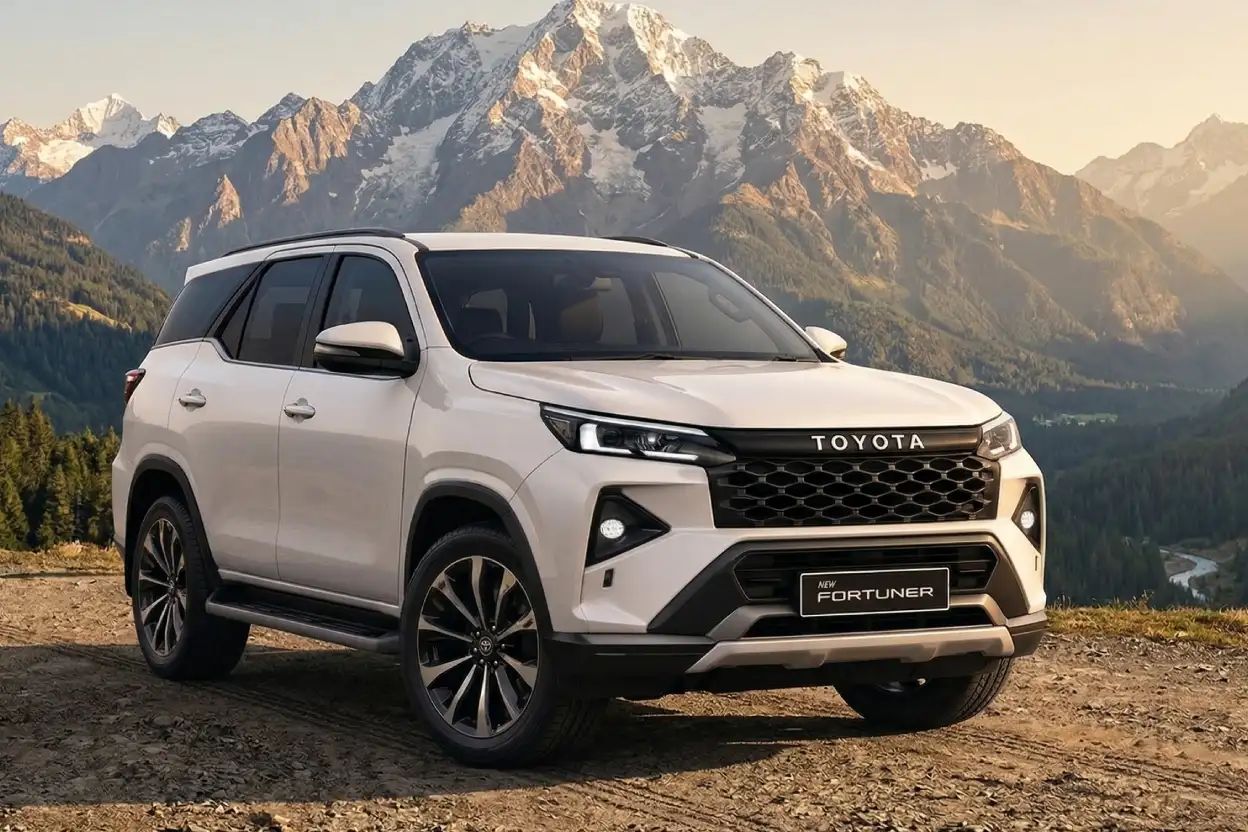
Prototype sightings suggest Toyota is pulling the design closer to its North American truck line — less smooth urban crossover, more deliberate about looking tough.
Expect a wider grille, tri-beam LEDs, more pronounced body cladding along the flanks, and a full-width LED light bar at the rear. The FORTUNER lettering is apparently embossed directly into the tailgate metal, which is either going to look sharp or gimmicky depending on execution.
The approach angle up front looks better than the current model. Good if you actually take it off-road. Most buyers won’t, but it still matters for the badge.
Interior
This is where the current car is hardest to defend.
Walk into a Tata Harrier or even a well-specced Mahindra Scorpio-N and the Fortuner’s cabin feels noticeably behind. Hard plastics, an 8-inch screen that barely keeps up with your phone — it’s not what you’d expect from a car at this price.
The 2026 car is expected to fix most of this. A dual 12.3-inch layout (infotainment plus digital cluster), ventilated seats, a panoramic sunroof (which this nameplate has never had), and a proper ADAS suite. Level 2 driver assistance and a 360-degree camera feel table-stakes at this point.
Whether the actual material quality catches up is harder to predict from spy shots. That’s what I’m watching most closely.
Comparison: Old vs. New (Projected)
| Feature | Current Gen (2016–2025) | New Gen (2026+) |
| Platform | IMV (Hilux-based) | TNGA-F (Land Cruiser-based) |
| Steering | Hydraulic | Electronic |
| Infotainment | 8-inch Display | Dual 12.3-inch Layout |
| Safety | 7 Airbags, VSC | ADAS Level 2 + 360 Camera |
| Gearbox | 6-speed AT/MT | 8-speed AT + Mild Hybrid |
| Sunroof | None | Panoramic |
The Hybrid Question
Don’t expect a strong hybrid. The 2.8L diesel isn’t going anywhere, but it’ll likely be paired with 48V mild-hybrid tech for torque assist — smoother start-stop in city traffic, a bit of help off the line. Think of it as refinement, not electrification. The Hycross-style setup is not what this car is built for.
The Competition
A few challengers are worth naming. The MG Majestor brings twin-turbo diesel power, locking diffs, and a feature list that feels almost excessive. The Ford Everest may come back via CBU. And the Prado sits above it all for buyers who want to spend more.
| Model | Engine | Key Strength |
| Toyota Fortuner (New) | 2.8L Diesel + Mild Hybrid | Reliability & Resale Value |
| MG Majestor | 2.0L Twin-Turbo Diesel | Tech & Off-road Hardware |
| Land Cruiser Prado | 2.7L / 2.8L Hybrid | Premium Capability |
| Skoda Kodiaq (2025) | 2.0L TSI Petrol | On-road Dynamics |
The Fortuner doesn’t win on specs against any of these. It wins on the fact that dealers are everywhere, parts are cheap, and owners rarely complain about reliability after 2 lakh kilometres.
The Real Question
Toyota doesn’t need to build the most exciting car in this segment. They know that. What they do need, at this price point, is an interior that doesn’t make buyers feel like they’re compromising. The TNGA-F platform should take care of the ride. If the cabin materializes the way the leaked specs suggest, they’ll hold this market for another generation without breaking a sweat.
But I’ve been hopeful before about Toyota interiors. I’ll believe it when I’m sitting in one.