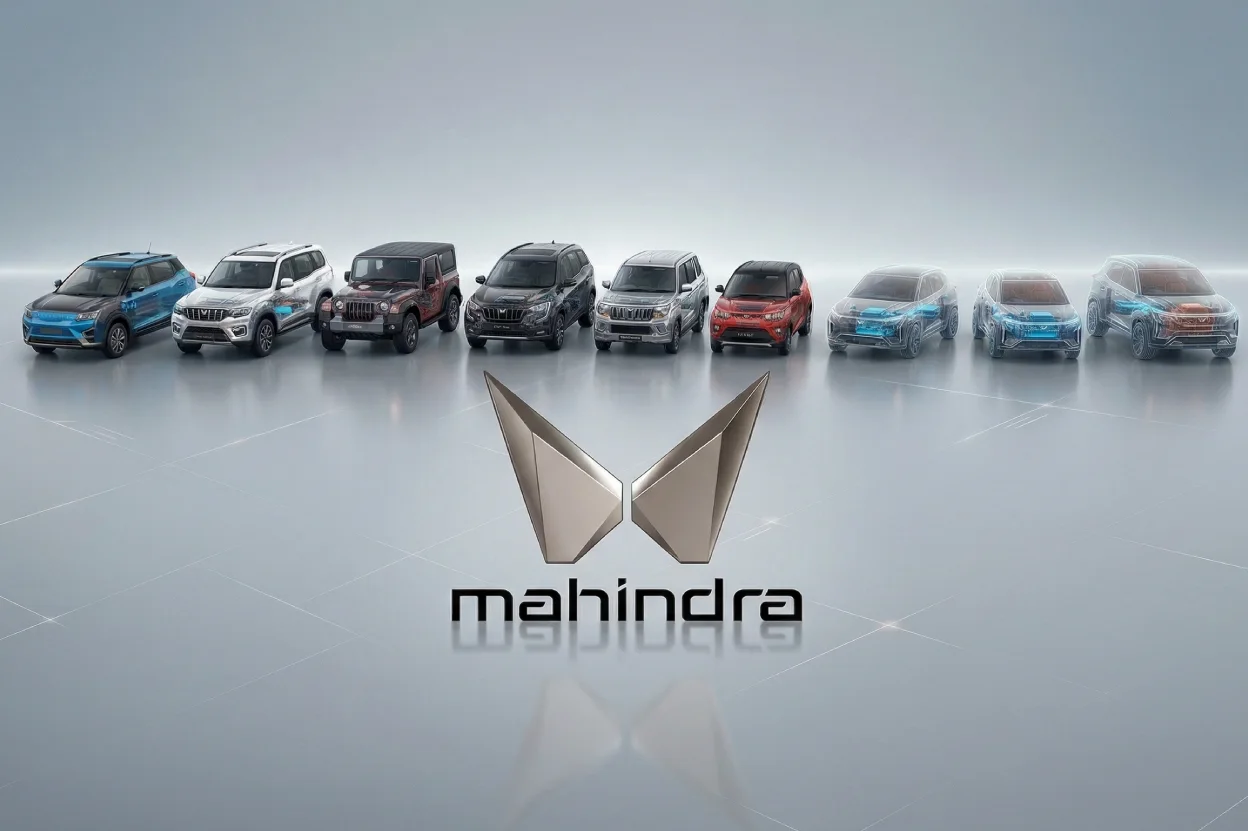
Mahindra isn’t just launching cars right now it’s flooding the market at once, from refreshed body-on-frame trucks to born-electric machines that should make some European marques nervous. The price range spans roughly ₹10 lakh to ₹28 lakh ex-showroom. Tata ran a similar playbook between 2020 and 2023. This is Mahindra’s version, and the pipeline is notably wider.
This piece covers every confirmed and expected launch, with honest comparisons to older models and segment rivals.
The Facelifted Scorpio-N Does It Still Hold Up?
The Scorpio-N was a big deal when it arrived in June 2022. I remember the booking-day chaos: servers crashing, waiting lists stretching months. It gave India a body-on-frame SUV that felt genuinely premium inside without the Fortuner’s price tag. Three years later, the competitive field has shifted. Spy shots confirm a facelift is coming as early as this summer.
What’s changing outside: Tweaked LED headlamp graphics, restyled bumpers, a new radiator grille, and freshly designed 18-inch five-spoke alloys. The chassis stays — mid-cycle refresh, not a redesign.
Inside: The bigger news is the instrument cluster. A 10.25-inch digital binnacle is expected, paired with a 10.25-inch touchscreen. The horizontal centre AC vents are also getting a rework, which should tidy up the cabin considerably.
Old Scorpio-N vs. Facelifted Scorpio-N What Actually Changes
| Feature | Scorpio-N (2022–2025) | Facelifted Scorpio-N (Expected 2025) |
| Instrument Cluster | 8-inch semi-digital | 10.25-inch fully digital |
| Infotainment Screen | 8-inch touchscreen | 10.25-inch touchscreen |
| Headlamps | LED with current DRL pattern | New graphic design |
| Alloy Wheels | 17-inch (base) / 18-inch | New 18-inch five-spoke design |
| Front Grille | Current slat design | Revised pattern |
| AC Vents | Circular/pod style | Horizontal layout |
The powertrain — the mStallion 2.0-litre turbo petrol and mHawk 2.2-litre diesel — almost certainly carries over. Fine by me. Those engines weren’t the problem. The Scorpio-N always had enough grunt; it just needed a technology catch-up.
How Does the Facelifted Scorpio-N Compare to Rivals?
| Model | Body Style | Starting Price | Key Engine | Boot Space |
| Scorpio-N (Facelifted) | Body-on-frame | ~₹13.99 lakh | 2.0T Petrol / 2.2 Diesel | 290L (7-seat) |
| Toyota Fortuner | Body-on-frame | ~₹33 lakh | 2.7 Petrol / 2.8 Diesel | 296L |
| MG Gloster | Body-on-frame | ~₹38 lakh | 2.0T Petrol | 452L |
| Isuzu MU-X | Body-on-frame | ~₹33 lakh | 1.9 Diesel | 257L |
No other body-on-frame SUV in India gets close to this price point with this much kit. Also worth factoring in: running costs, parts availability, and dealer density. Mahindra’s domestic supply chain gives it a servicing cost advantage that Toyota or Isuzu simply can’t match at this price.
Second-Gen Thar Facelift Finally Looks Like Its Bigger Sibling
The second-gen Thar launched in October 2020 and was a genuine improvement — air-conditioned cabin, touchscreen, monocoque derivative in the works. But the front always looked slightly out of step with the Thar Roxx that came later.
The upcoming facelift, expected in Q3 this year, sorts that out. The new front borrows the Roxx’s design language: LED headlamps with that C-shaped DRL signature and a six-double-slot grille. There’s also reportedly a 19-inch wheel option, which would be a first for the nameplate.
Inside: Smart entry, push-button start/stop, wireless charging, ventilated front seats, auto-dimming rear-view mirror. I’ve spent time with both the 3-door Thar and the 5-door Roxx — in the Indian climate, ventilated seats alone change the day-to-day experience considerably.
Thar 2020 vs. Thar Facelift 2025
| Feature | Thar Gen 2 (2020) | Thar Facelift (2025 Expected) |
| Headlamps | Projector LED | C-shaped DRL, new LED cluster |
| Grille | 7-slot | Six-double-slot (Roxx-style) |
| Wheel Size | Up to 18-inch | Up to 19-inch (expected) |
| Smart Entry | No | Yes |
| Push-button Start | No | Yes |
| Ventilated Seats | No | Yes (front) |
| Wireless Charging | No | Yes |
Thar Facelift vs. Segment Competitors
| Model | Doors | Price Range | Powertrain | USP |
| Mahindra Thar (Facelifted) | 3 & 5-door | ~₹11–18 lakh | Petrol / Diesel / EV | 4×4 off-road capability |
| Force Gurkha 5-door | 5-door | ~₹16–18 lakh | 2.6 Diesel | More hardcore off-road |
| Maruti Jimny | 5-door | ~₹12.7–15 lakh | 1.5 Petrol | Lighter, fuel-efficient |
The Jimny is the rational choice on paper — better fuel economy, smoother on road, easier to park. The Thar sells on capability and emotional pull, and the C-shaped DRL update makes it look more coherent with the wider Mahindra range.
Mahindra Vision.S The Compact SUV With Fans Before Production
This is the one I’m most interested in. The Vision.S concept pointed at a compact SUV sitting in the gap between the XUV 3XO and the Thar — monocoque ride comfort with the muscular stance of something bigger. Mahindra’s building it on its new NU_IQ platform, production version expected in early 2026.
The variant lineup reportedly covers petrol, diesel, and a petrol-electric hybrid. That hybrid inclusion makes sense. It fills the gap that a pure EV and a conventional diesel both miss: long-range practicality with real-world efficiency gains. Pricing should start around ₹10–12 lakh, dropping it right into the thickest part of the Indian market.
Vision.S vs. Likely Compact SUV Rivals
| Model | Platform | Expected Price | Powertrain Options | Notable Feature |
| Mahindra Vision.S | NU_IQ (monocoque) | ~₹10–15 lakh | Petrol/Diesel/Hybrid | BOF-like stance |
| Tata Nexon | ALFA-ARC | ₹8–15 lakh | Petrol/Diesel/EV | Wide variant range |
| Hyundai Venue | Monocoque | ₹7.94–13.5 lakh | Petrol/Diesel/DCT | Korean feature list |
| Kia Sonet | Monocoque | ₹7.99–15.8 lakh | Petrol/Diesel | Premium feel |
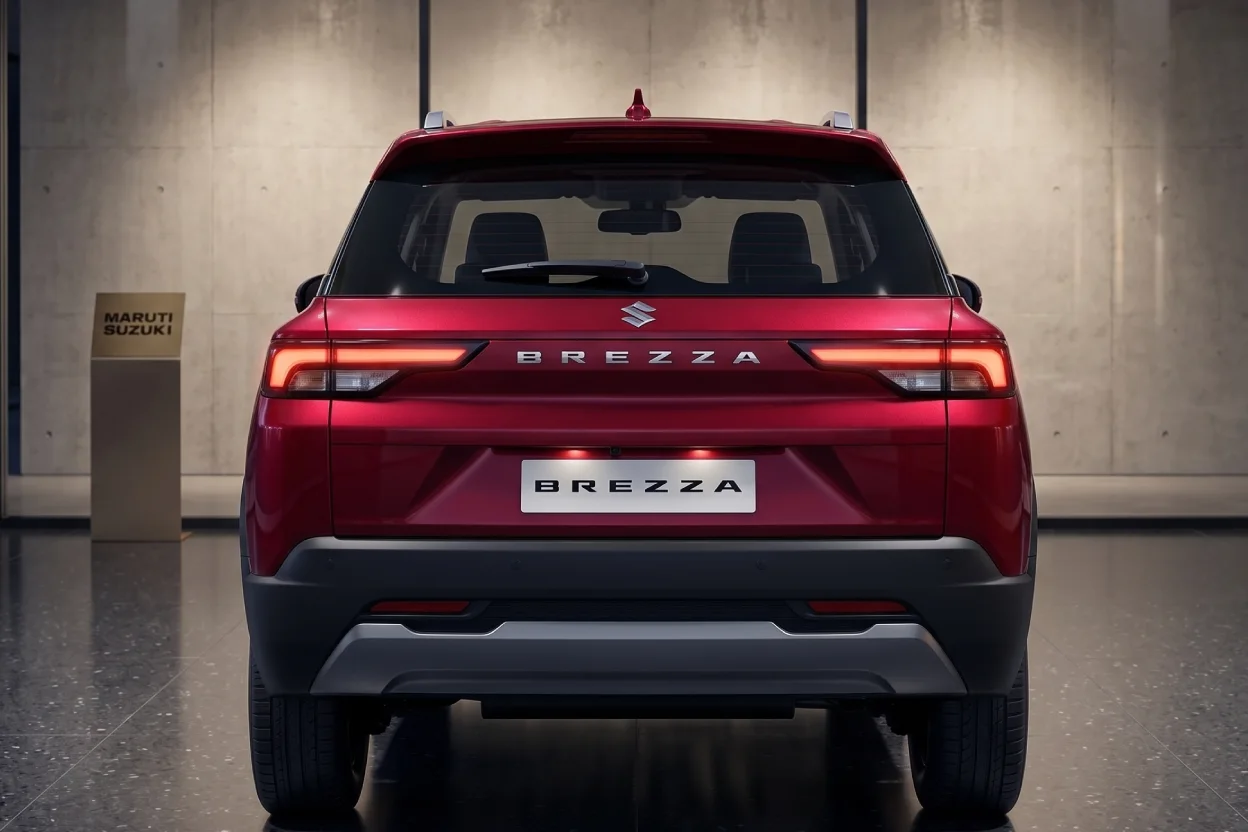
| Maruti Brezza | Heartect | ₹8.34–14.14 lakh | Strong Hybrid | Mileage |
BE.07 Mahindra’s Take on Premium Electric SUV Territory
Expected in Q2 2026, the fifth model in Mahindra’s Born Electric range — likely badged BE 7 or BE.07 — is roughly 4.6 metres long with a 2.8-metre wheelbase. Those are midsize SUV numbers that put it directly against the Tata Harrier.ev and VinFast VF 7.
Two powertrain options from the leaked specs:
-
228 hp / 380 Nm — 59 kWh LFP battery, single-motor RWD, claimed range ~530 km
-
282 hp / 380 Nm — 79 kWh LFP battery, single-motor RWD, claimed range ~650 km
The LFP (Lithium Iron Phosphate) chemistry handles heat better and degrades more slowly, making it the right choice for Indian summers.
BE.07 vs. Electric SUV Rivals in India
| Model | Length | Battery | Range (Claimed) | Price (Expected) |
| Mahindra BE.07 | ~4.6m | 59/79 kWh LFP | 530/650 km | ~₹22–28 lakh |
| Tata Harrier.ev | 4.6m | 65 kWh | 500 km | ~₹21.49–28 lakh |
| VinFast VF 7 | 4.545m | 75.3 kWh | 431 km | ~₹24–27 lakh |
| Hyundai Creta Electric | 4.3m | 51.4 kWh | 473 km | ~₹17.99–23.5 lakh |
The Full Mahindra Launch Pipeline
| Model | Expected Timeline | Type | Estimated Price |
| Scorpio-N Facelift | Summer 2025 | ICE BOF refresh | ₹13.99–25 lakh |
| Thar Facelift | Q3 2025 | ICE BOF refresh | ₹11–18 lakh |
| Vision.S Production | Early 2026 | Compact SUV (ICE/Hybrid) | ₹10–15 lakh |
| BE.07 | Q2 2026 | Electric SUV | ₹22–28 lakh |
What This All Means
Mahindra’s product team is going after segments it never properly owned — volume compact SUVs with the Vision.S, premium EV territory with the BE.07. Brands that hit the market with this many simultaneous launches tend to pick up 2–3 years of elevated market share before rivals catch up.
If you’re sitting on a fence about a new SUV purchase, waiting until mid-2026 isn’t unreasonable. The question worth asking isn’t whether the specs look compelling — they do, on paper. It’s whether the assembly line and the dealership network can deliver at this volume. I’ve watched enough Indian automotive cycles to know that’s never a given.