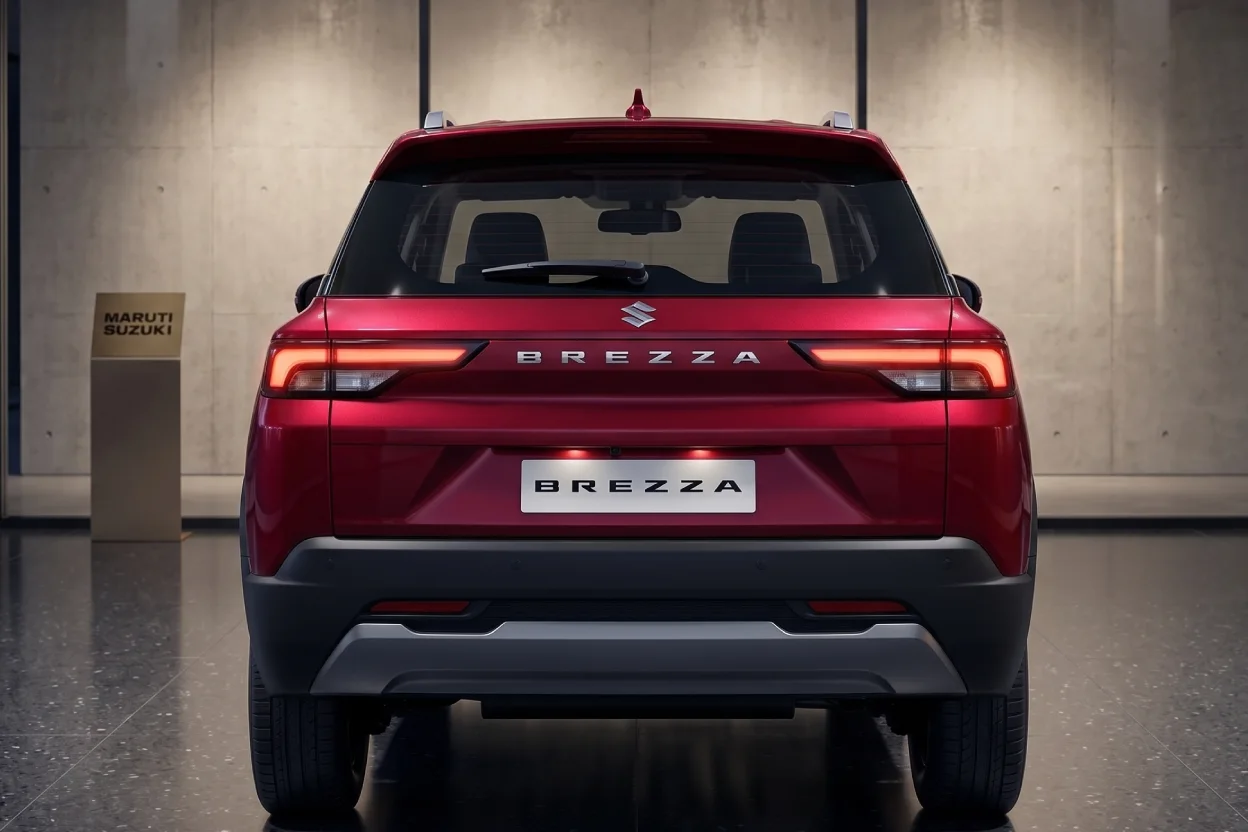
The Brezza has led the compact SUV segment since 2016, and Maruti is clearly not interested in giving that up. Camouflaged test mules have been spotted near their R&D facilities, pointing to a facelift likely timed for the festive season. The changes go deeper than the usual headlamp and screen refresh.
Powertrain
The 1.5-litre K15C DualJet stays—102 bhp, 137 Nm, smooth but flat above 3,000 rpm. The five-speed manual is finally getting replaced by a six-speed, which should help highway cruising and cabin noise.
The more interesting question is the 1.0L Boosterjet turbo, the same unit in the Fronx. Nothing confirmed, but the rumors keep surfacing. The NA engine is adequate for city use; on a highway overtake, the Venue’s turbo feels like a different class of car. If Maruti adds the Boosterjet, that comparison gets less embarrassing. If they don’t, rivals will keep using it in ads.
CNG buyers are the quiet majority here. The current boot-mounted cylinder kills cargo space. Reports point to an underbody tank on the 2026 model. If true, that’s a straightforward win for a big chunk of Brezza customers—not a headline feature, but something people would notice every time they tried to fit luggage.
Interior
The cabin works but trails the Sonet on fit and finish. Bigger screen (10.1 inches, up from 9), wireless phone integration, ventilated front seats—expected. The ventilation in particular isn’t a luxury at Indian summer temperatures; it’s overdue.
The ADAS package is the real news. Level 2—automatic emergency braking, lane assistance, adaptive cruise—hasn’t appeared in a Brezza before. Whether it handles Indian roads without constant false alerts is the actual test, and that won’t be clear until someone runs it in Pune traffic for a month.
Competitive Analysis: 2026 Maruti Suzuki Brezza vs. Rivals
Based on the latest industry benchmarks and the data provided in the visual comparison, here is how the upcoming Brezza facelift stacks up against its fiercest competitors in the sub-4-meter segment.
| Feature | Brezza 2026 (Expected) | Tata Nexon | Hyundai Venue |
| Dimensions (L/W) | 3995mm / 1790mm | 3995mm / 1804mm | 3995mm / 1770mm |
| Ground Clearance | 198mm | 208mm | 190mm |
| Engine Options | 1.5L NA / 1.0L Turbo | 1.2L Turbo / 1.5L Diesel | 1.2L NA / 1.0L Turbo |
| Transmission | 6-MT / 6-AT | 6-MT / 7-DCA | 5-MT / 7-DCT |
| CNG Setup | Underbody tank | Twin cylinder | Single cylinder |
The Nexon has diesel, better ground clearance, and a DCA gearbox. The Venue has the DCT. Both have been used against the Brezza for years. What keeps the Brezza competitive is the price gap and Maruti’s service network—there’s a workshop within reach almost anywhere in the country, which matters to a lot of buyers more than a seventh gear.
The Pricing Problem
Adding ADAS, bigger screens, and ventilated seats costs money. If Maruti spreads those across trims sensibly, the Brezza stays competitive. If the loaded variant starts touching Creta prices, some buyers will just buy the Creta—and that’s not an irrational call.
The 2026 Brezza probably improves on every meaningful metric. Whether it improves enough, at the right price, is the question that doesn’t get answered until the launch window actually opens.